
Crawdaddy! at 60
Why Paul Williams Matters

The 2026 calendar is packed with Dylan jubilees. Blonde on Blonde (60), Desire and Hard Rain (50), “Love and Theft” (25), Modern Times (20), and the Nobel Prize (10) all blow out birthday candles this year. For writers and readers of Dylan criticism, there’s another important milestone worth celebrating: Crawdaddy! turns 60. To honor the occasion, I offer this tribute to Paul Williams, founder of the first serious magazine devoted to rock music, and my most cherished Dylan critic.
If you ever get hold of my forthcoming book Dylan in Cincinnati, you’ll find this passage at the end of the acknowledgments:
I revere Paul Williams as the best writer who ever lived when it comes to Dylan in performance. His three-volume Performing Artist series sits on the top rung of the ladder that I’m always stretching to reach. Williams died before I got the chance to meet him and thank him for his work, but he is to Dylan in Cincinnati what Buddy Holly is to Time Out of Mind: a guiding spirit hovering over the whole project. Dylan inspires us to listen and think and feel so much through his performances. Williams teaches us how to listen carefully and communicate honestly what we hear. This book is dedicated to them both. (ix)
I want to expand on that dedication, explaining what I find so vital, compelling, inspiring, and relevant about his writing—Why Paul Williams Matters.
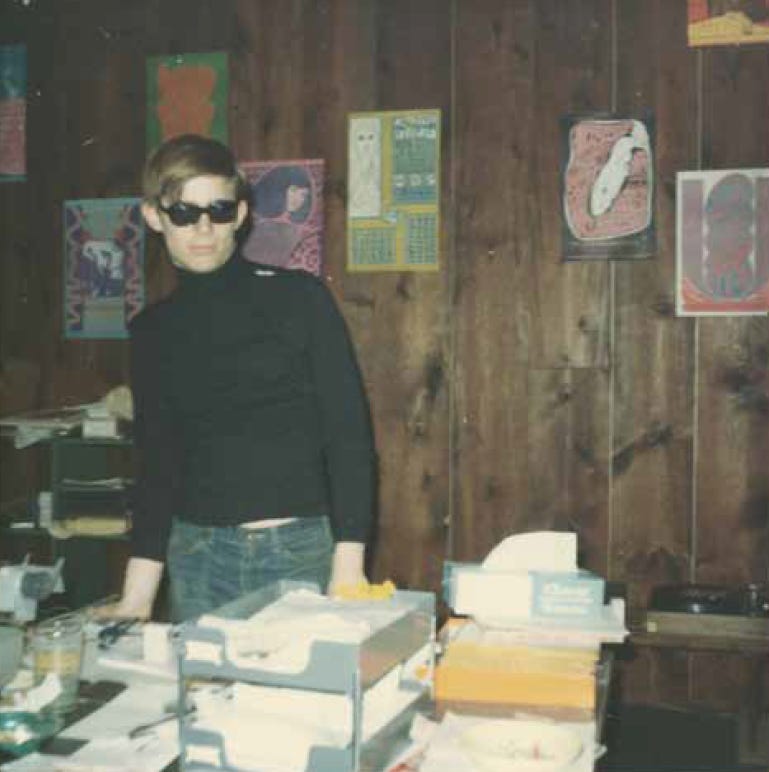
I’ll focus mostly on his early writing about Dylan, from the creation of Crawdaddy! in early 1966 through his initial departure from the magazine in late 1968. Most writers would cringe at the notion of being judged by juvenilia composed between the ages of 17 and 20. Admittedly, Williams sometimes displays more youthful enthusiasm than critical acumen in those first couple years. But not as often as you’d expect. From start to finish, his brand was guileless wonder combined with monastic devotion and unbridled passion—right from the pistol-shot exclamation point in Crawdaddy!
I’ve been rereading select Crawdaddy! pieces collected in his first book Outlaw Blues (1969), and I’m impressed by how consistent his early work is with his later criticism. He established the tenets of his faith in rock & roll between 1966 and 1968, and he remained true to those principles for the rest of his life. He honed his craft over time, culminating in the indispensable three-volume Performing Artist series (1990, 1992, 2004). But his basic values and sense of vocation were fixed from the beginning. Paul Williams knew what he wanted to write about, how he wanted to approach his subject, and what sort of relationships he wanted to nurture between the music, the artist, the writer, and the reader. He got there first, and he did his thing better than anyone else. Now follow me as we chase the shadow of the GOAT!
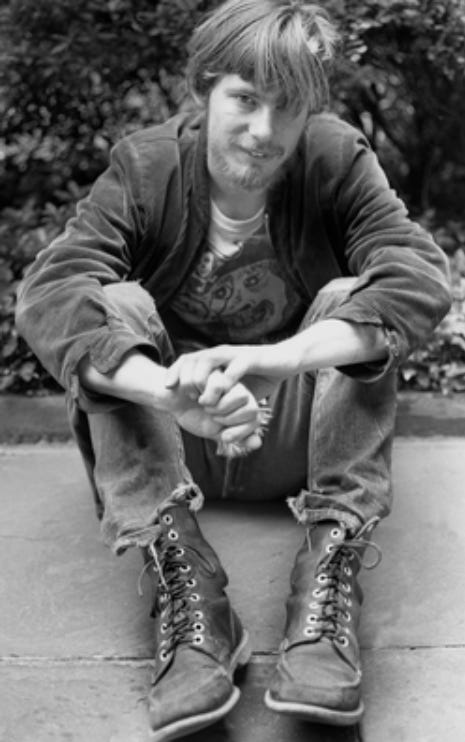
The Birth of Crawdaddy!
According to his bio in Outlaw Blues, “Paul Williams, ‘rock critic,’ was born on January 30, 1966, at the age of seventeen. His birth was self-induced; another part of him had willfully succumbed to the urge to publish and edit, and had started Crawdaddy!, ‘The Magazine of Rock ’n’ Roll’” (OB 2). Three decades later, in a quirky but revealing interview with himself for the San Diego Reader, Williams recalls,
I thought I’d call it Crawdaddy! after the club in London where the Rolling Stones and the Yardbirds got their start. It was intersession, January 1966, and I said “Fuck it” and hitched to New York and slept on the floor in a friend’s room and went to a couple of record companies and listened to records they gave me and typed. And that weekend I went to another friend’s place in Brooklyn […] and ran off 500 copies of my ten-page magazine of rock and roll record reviews, the forerunner of Rolling Stone, etc. (SDR)
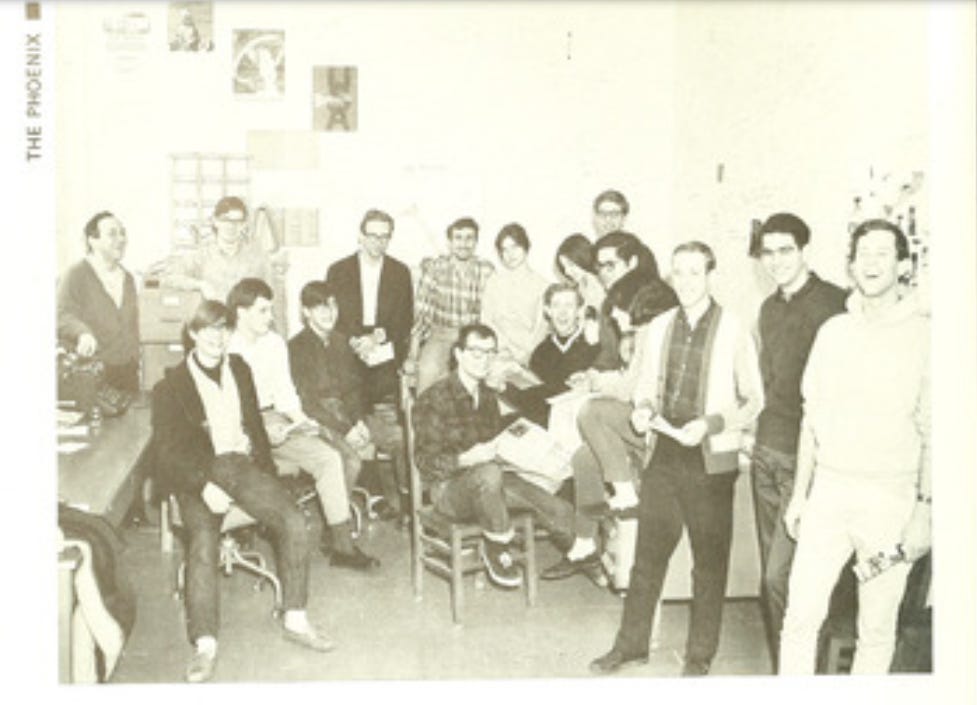
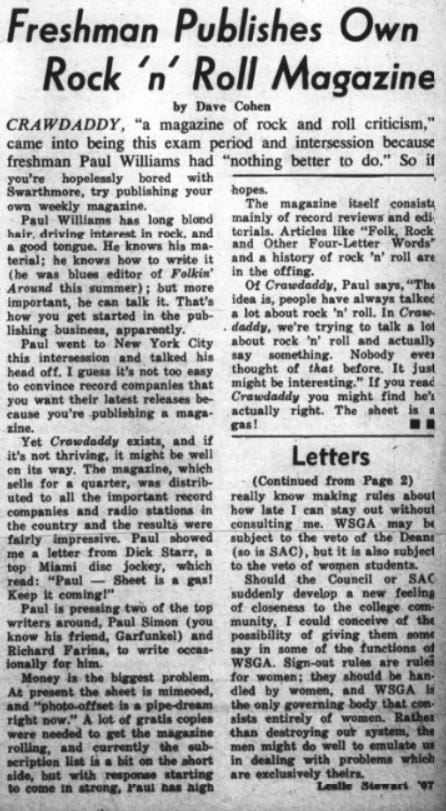
Williams quickly discovered that there was a hungry demand for his kind of rock criticism. The popularity of Crawdaddy! quickly expanded beyond his local region, and enthusiastic readers included some of the very musicians Williams was writing about. He soon dropped out of Swarthmore to pursue his calling full time. “I was lucky,” he notes in his 1995 self-interview. “The thing called the rock press was being invented right along with rock music, and I happened to be there at the right time” (SDR). The fledgling writer was bold enough to contact emerging rock stars, and many of them granted him extraordinary access.
I hung out with musicians whose work I liked whenever I got the chance, but I think most of the time I felt that pulling out a tape recorder would get in the way of being friends, which was important to me—there was no pretense of professionalism, really. We were anti-professional, the idea was that we were all part of the same scene, including—at least at first—the audience. (SDR)
As a 17-year-old he spoke for a couple hours with Dylan during his 1966 tour stop in Philadelphia (more on that to follow). He got to know Brian Wilson even better. In December 1966, he hung out with the Beach Boys’ mastermind in the studio and at his L.A. home:
Michael Vosse drove me up the hill to Brian Wilson’s mansion, and I stayed there a couple of days, listening to acetates of tracks from Smile, talking and talking with Brian, I couldn’t tell you about what, filming and being filmed by him with the new videocassette camera/player Capitol Records had given him for Christmas, meeting the Beach Boys at the recording studio and at a dinner—they were just back from England—and attending a Smile recording session. And back at the mansion, standing in the heated pool with Brian at 3:00 a.m., all the twinkling lights of the city far below, the dogs who barked on Pet Sounds watching us, smoking dope, and having these great ideas. (SDR)
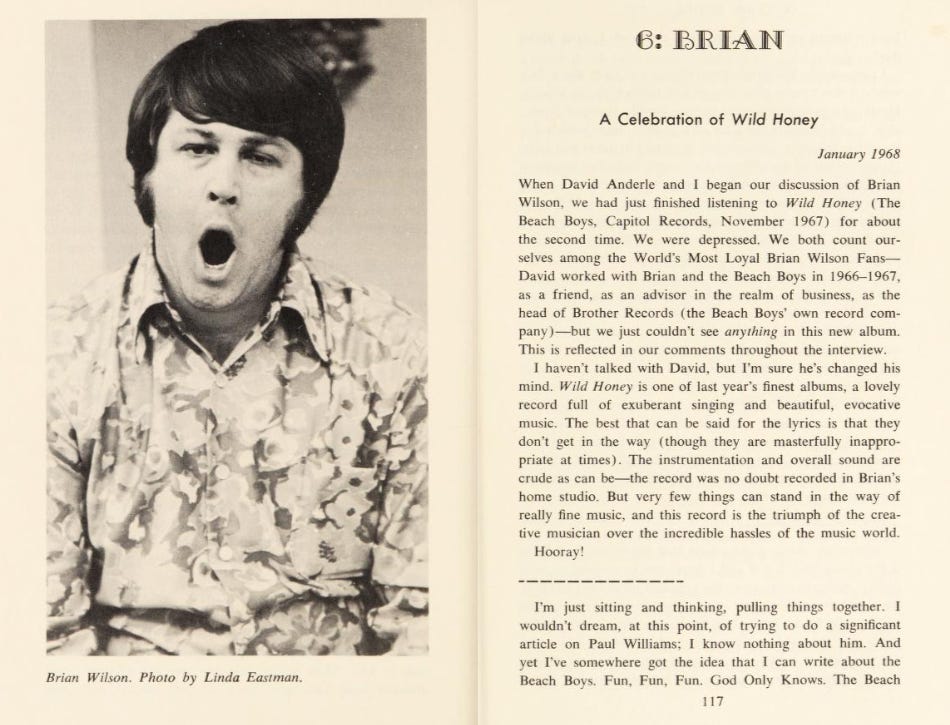
Williams witnessed rock criticism changing in the years after Crawdaddy! laid the foundation: “As the musicians became more famous and the audience became celebrity-watchers rather than participants, things changed a lot. And the pressure was on journalists to provide stories about colorful people and scenes, rather than music” (SDR). However, he held fast to the creed that inspired Crawdaddy!: “But for me it was always the music that was most important. I wanted to write for the passionate listener, rather than the voyeur” (SDR). The music he listened to most passionately and wrote about most fervently were the songs of Bob Dylan.
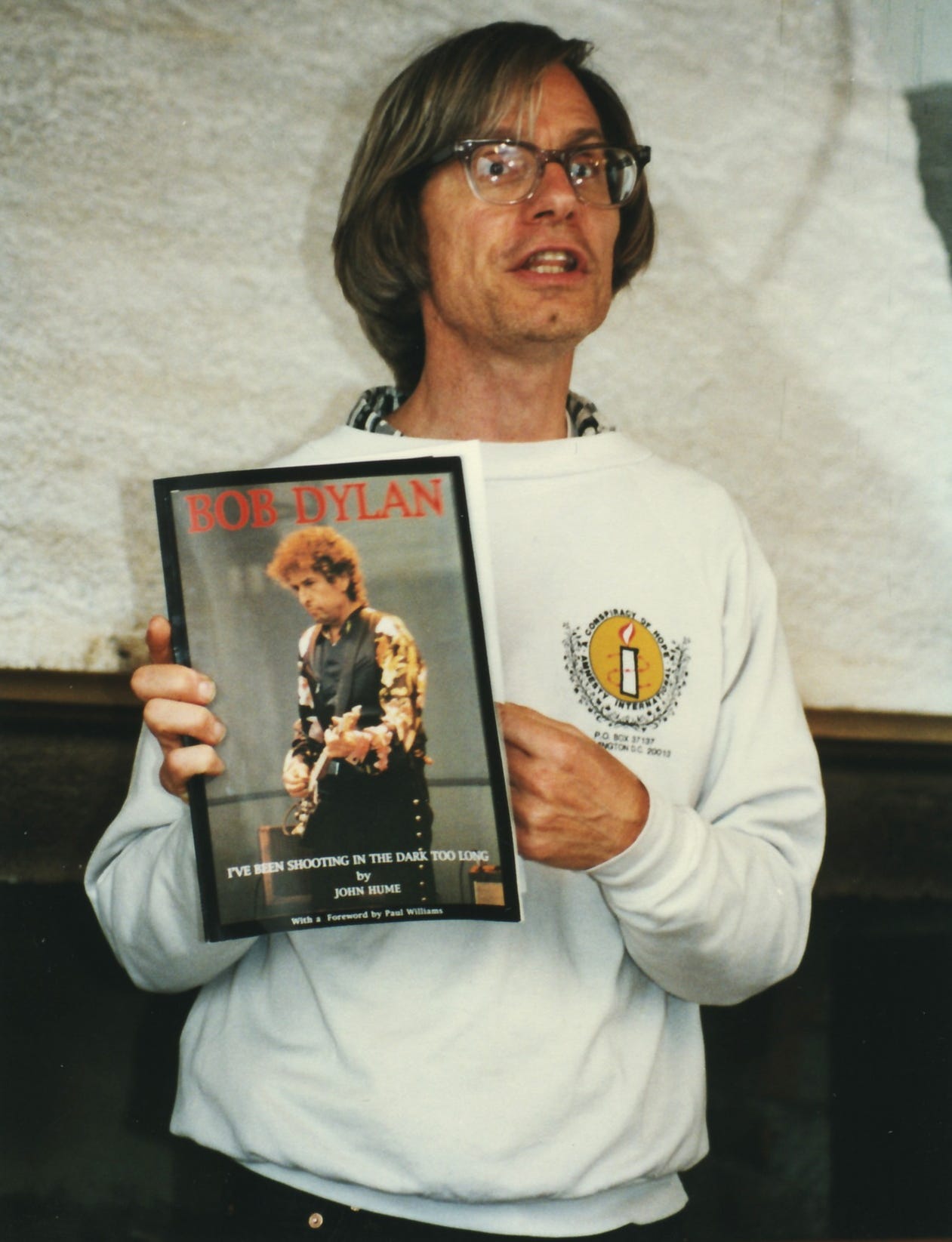
“Understanding Bob Dylan” (Issue #4, July 1966)
Paul Williams’s “Understanding Dylan,” his first of three Crawdaddy! articles on the artist, appeared in July 1966, the same month Dylan’s notorious motorcycle accident. The 18-year-old Williams begins, “Perhaps the favorite indoor sport in America today is discussing, worshipping, disparaging, and above all interpreting Bob Dylan” (OB 59). It would certainly remain his favorite indoor sport for years to come.
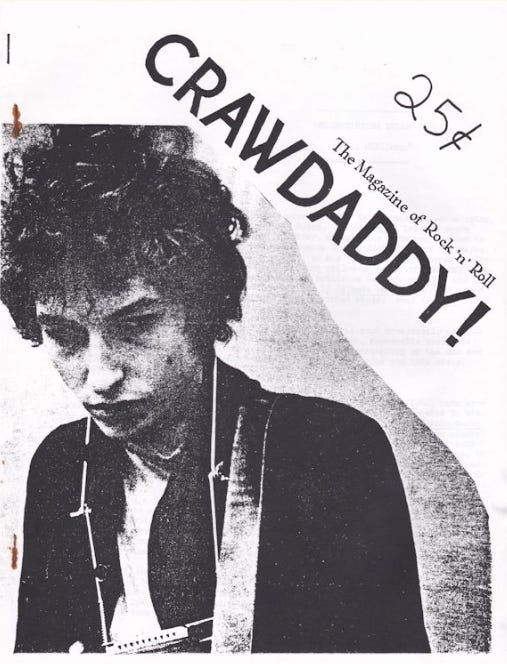
Williams wasn’t among the folkies who booed Dylan at Newport ’65, but he did attend the 1966 festival to sell them copies of Crawdaddy! He seems to have that specific audience in mind while writing his defense of Dylan’s artistic evolution and creative independence:
As long as people persist in believing that Dylan would be playing his new songs on a folk guitar instead of with a band, except that recording with a band brings him more money, they will fail to realize that he is a creator, not a puppet, and a creator who has now reached musical maturity. Dylan is doing his songs now the way he always wanted to do them. He is a bard who has found his lyre, no more, no less; and if you’re interested in what he’s saying, you must listen to him on his own terms. (OB 61)
With a title like “Understanding Bob Dylan,” you might expect the critic to lecture us on Dylan’s art, or provide a detailed exegesis of Dylan’s new album Blonde on Blonde. Nope. His first article on Dylan sets the stage for much of his future criticism by privileging feelings over intellectual interpretation. He declares, “A song is an experience. The guy who writes the song and the guy who sings it each feel something; the idea is to get you to feel the same thing, or something like it. And you can feel it without knowing what it is” (OB 63, emphasis in original).
Instead of unveiling hidden messages from Blonde on Blonde, Williams suggests simple strategies for aesthetic appreciation. For starters, he stresses the importance of paying close attention: “The way to ‘understand’ Dylan is to listen to him. Listen carefully; listen to one song at a time, perhaps playing it over and over to let it sink in” (OB 64). He reiterates this point later in the article: “But above all listen to his albums; listen carefully, and openly, and you will see a world unfold before you. And if you can’t see his songs by listening to them, then I’m afraid that all the explaining in the world will only sink you that much deeper in your sand trap” (OB 66). Listen—carefully, repeatedly, openly, mindfully—paying close attention to how the songs make you feel. Sounds easy enough, but it’s remarkable how few Dylanologists follow this basic advice.
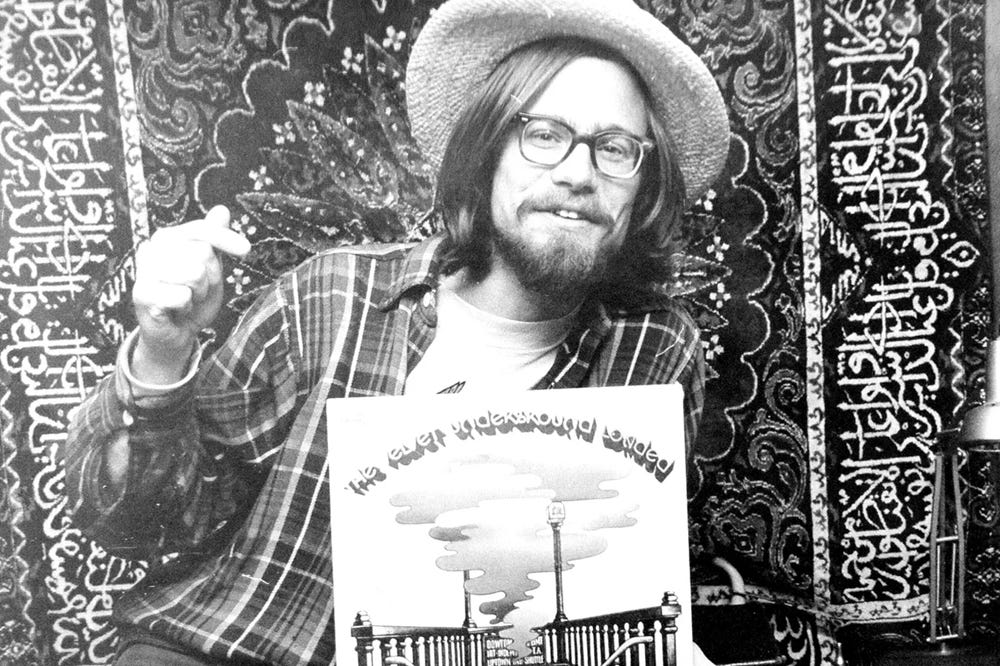
Avoid speculating about what a song means to Dylan, and focus instead on what it means to you: “In many ways, understanding Dylan has a lot to do with understanding yourself,” counsels Williams. “So it isn’t fair to ask Dylan what the phrase means, or rather, why it works; the person I really have to ask is the person it works on—me” (OB 66). Dylan makes exactly the same point in The Philosophy of Modern Song: “Knowing a singer’s life story doesn’t particularly help your understanding of a song. It’s what a song makes you feel about your own life that’s important” (9).
“The Period of Silence” (Issue #10, August 1967)
Williams’s next Crawdaddy! piece on Dylan was a brief report published a year later, essentially checking in to say there’s nothing to report. “As I write this—August 1967—Bob Dylan has been silent for more than a year” (OB 69). It’s a testament to Dylan’s exalted stature in the mid-sixties that even his silence was considered newsworthy.
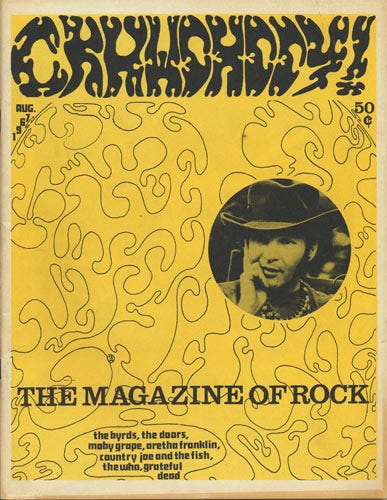
Williams derides unfair expectations for Dylan as a spokesperson, but that doesn’t keep him from writing a story on the sabbatical from public speech anyway. His angle is that Dylan’s fans are growing up, and as they age, they have an opportunity to develop a deeper appreciation of previous songs, in the absence of any new ones:
Dylan has been silent. But songs are never silent—they speak, long after they’ve been spoken. Dylan’s songs do not decay in time; rather, time flows over them, enriches them, filling in the little cracks we did not understand. “My Back Pages”; “Baby Blue”; “One Too Many Mornings”—these songs have meaning now, and always will. Dylan owes us nothing. We owe him already more than we can give. (OB 71)
I’ll concede that Williams doesn’t hit a homerun with every swing. His second article on Dylan sometimes lapses into the sort of sentimental hero worship that wouldn’t have passed muster in his more mature later work.
No profile of Paul Williams would be complete without acknowledging that his writing style is not for all tastes. Among my circle of friends, Williams is hands-down our favorite Dylan critic, but this opinion is not universally held. “For many Dylan aficionados, Williams’ eternally boyish style is hopelessly gushing and somewhat Californian,” writes Michael Gray, “while the unbounded enthusiasm of his descriptions of Dylan on stage often assumes he is privy to, and must explain for us, Dylan’s thoughts and feelings as he stands there” (707, emphasis in original). A hit, a very palpable hit. To his credit, however, Gray also presents the case for the defense: “On the other hand, for a wide range of readers, other Dylan writers and celebrities, Williams is the best possible explicator of the performing side of Dylan’s art and writes with a breadth of knowledge matched by percipience as well as passion” (707).
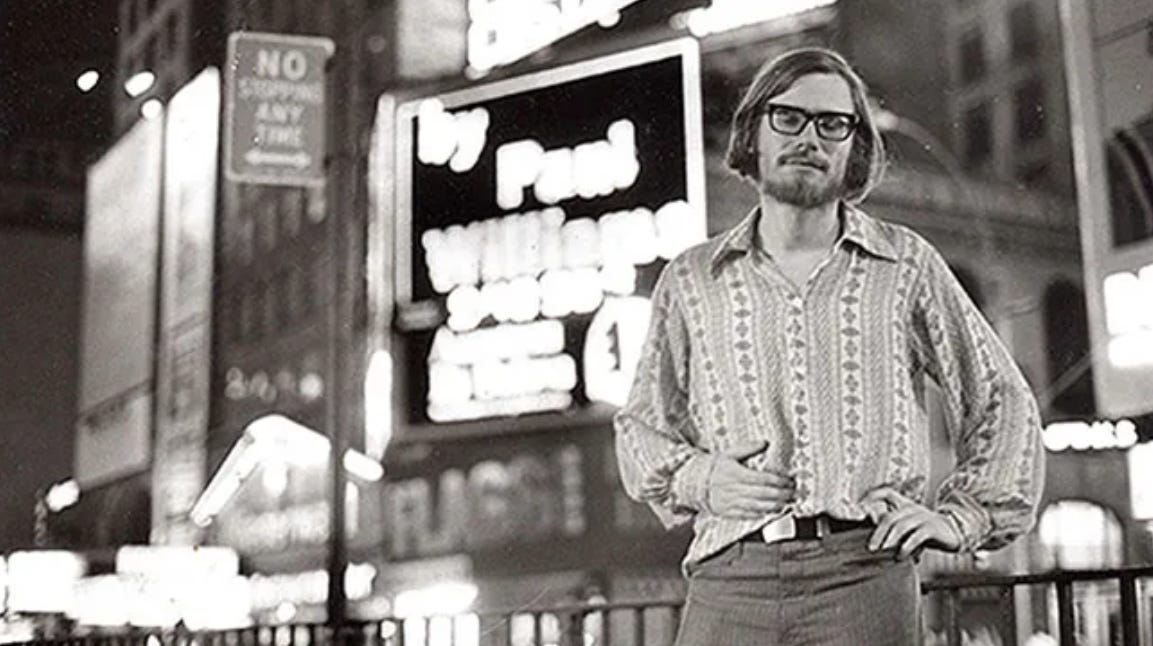
Look, just because I love Paul Williams doesn’t mean I want ever Dylan critic to sound like him. Michael Gray, Greil Marcus, Christopher Ricks, Andrew Muir, et al. have voices and perspectives that are totally distinct from Paul Williams, and I wouldn’t wish it otherwise. That variety is a strength, and there’s room for them all and many more under the big tent of Dylan criticism.
My litmus test for good criticism is pretty simple: does the writer help me better appreciate art that matters. Williams consistently passes that test, with clear-eyed, open-hearted, plain-spoken prose. I never met him, but I feel like I know him through his writing. I’ve also never met Bob Dylan and don’t think I’d want to—way too intimidating! But I feel that I would’ve gotten along quite well with Paul. He fosters camaraderie and intimacy, with his subject and with his reader, like we’re all fellow travelers on the same pilgrimage, hitchers on a shared road.
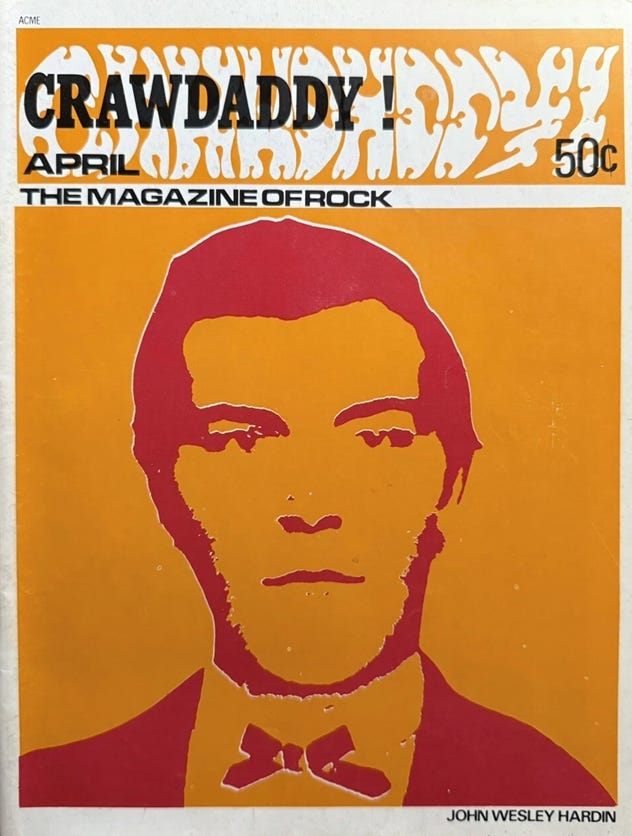
“God Bless America” (Issue #15, April 1968)
Dylan broke his silence in memorable but cryptic fashion with the release of John Wesley Harding at the end of 1967. Williams began his review in January 1968 but ruminated on it for a few months before publishing “God Bless America” in the spring. In his first Dylan article for Crawdaddy! he showered Blonde on Blonde with superlatives. But in his final Dylan article from the initial 1966-68 run, he is struggling with John Wesley Harding. He opens:
So stop what you’re doing, and hello to John Wesley Harding. The medium is the messenger, and wicked is as wicked does, anyway. Don’t ask me nothin’ about nothin’. Bob Dylan welcomes us all back to the center ring, with many pithy wisdoms which we can take at surface value, surface value at a depth of ten feet, surface value at a depth of twenty feet, and on. “Nothing is revealed.” Which is not to imply that the whole album may be unfathomable: at least the soundings are good. But why all these nautical jokes? (OB 71)
The nautical jokes signal that he’s floundering out of his depth on JWH. To be frank (“the key is Frank!”), he’s not quite sure what to make of it.
This was not at all the comeback album fans were expecting from Dylan, and Williams registers the community’s perplexity. By this point, however, the trailblazer had earned the benefit of the listener’s doubts. Williams trusted Dylan’s instincts and integrity enough to believe that, once he immersed himself further in JWH, he would eventually learn to swim, “even if it does sound like some half-country half-blues guy with clever old Nashville cats helping him along, some guy who might in fact just be on the verge of inventing rock and roll in say 1954, even if it sounds like all that nice ethnic music that everyone can dig but no one can really get into, well, you’ve got to get into it because it’s a Dylan album” (OB 74, emphasis in original).
The article was written in stages, and as it progresses you can tell Williams has spent more time with the record and is warming up, “since nothing could be more exciting than a new Dylan album, why, here you are getting into it. Good old rock, expanding our minds, opening us up to the word, making us comfortable with and therefore able to appreciate more and more subtle, good stuff. Rock, the friendly music. Bob Dylan, frontier scout. Sociologists, take note” (OB 75).
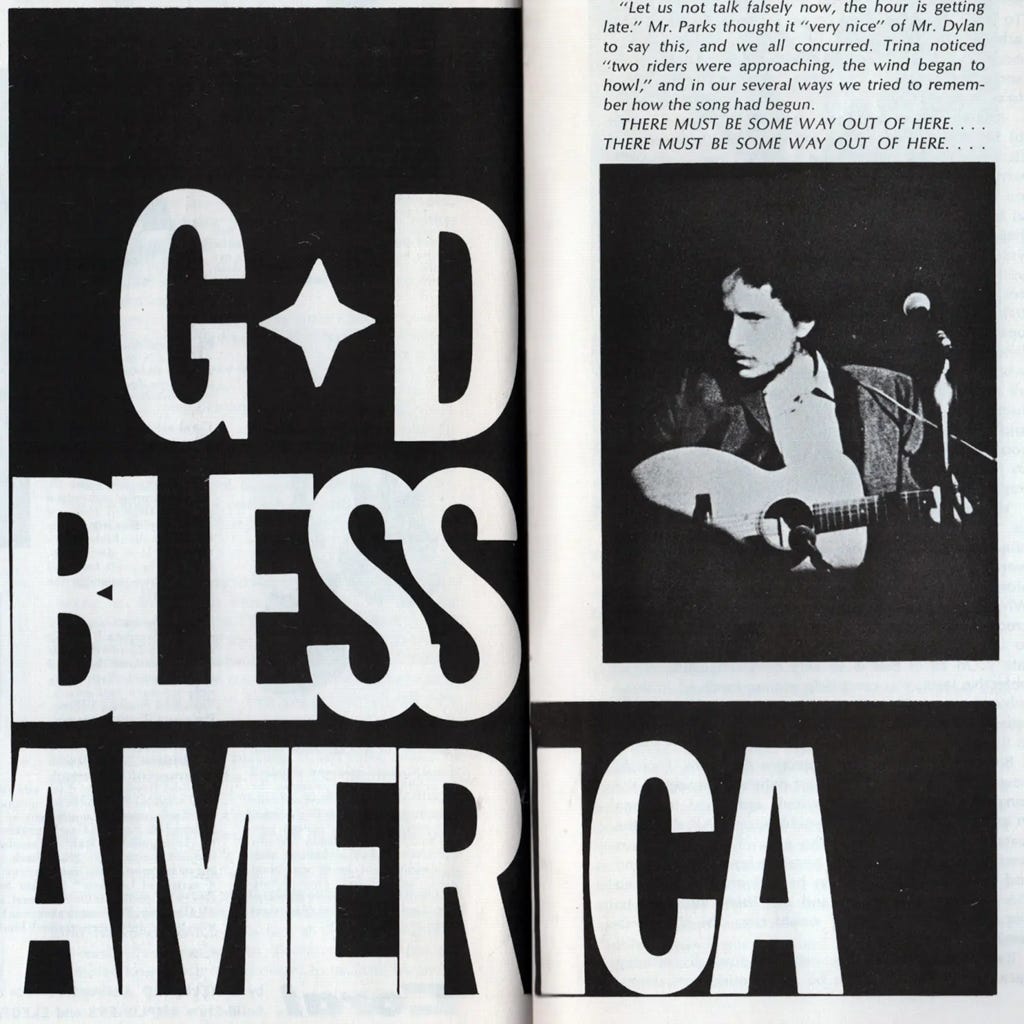
Is the album truly winning him over? Or is he just being deferential? Or even facetious? His critical bearings seem thrown off by JWH. For instance, I’m surprised that he characterizes the record’s overall vibe as serene: “The whole album offers this sense of shelter, of quietness and ease and protection with everything else that exists in the world ever-so-gently implied in the knotty wood of the cabin walls” (OB 77). Are we listening to the same album, Paul?
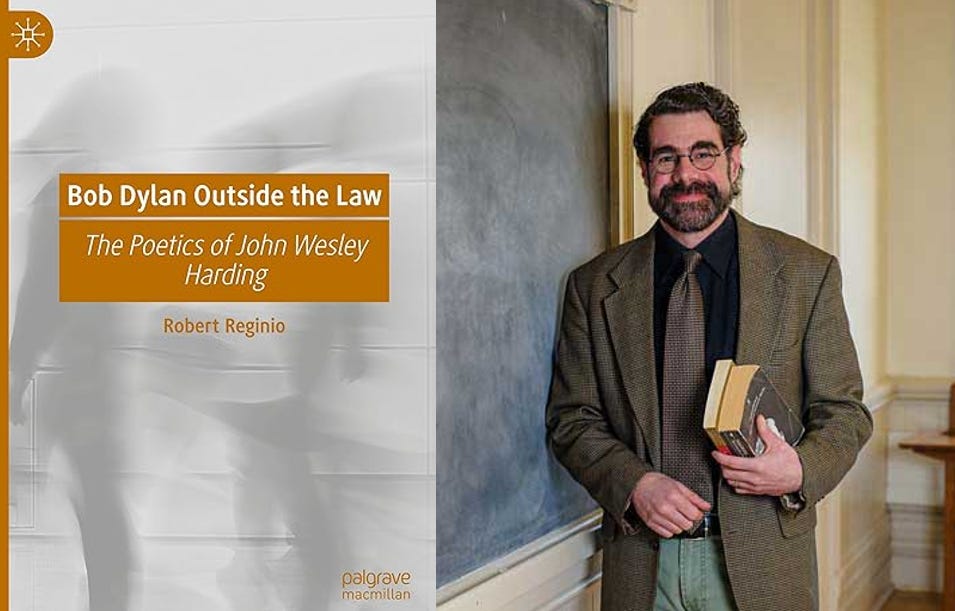
I’m much more persuaded by my friend Rob Reginio’s argument in his important book, Bob Dylan Outside the Law: The Poetics of John Wesley Harding. Rob contends that the seeming simplicity of JWH masks a much more complex project:
Many commentators have written that it is an album out of step with its own time, that it runs against the album-length psychedelic statements of, most notably, The Beatles’ Sgt. Pepper’s. While no doubt true, and while it is no doubt that Dylan had his ears tuned to the cutting edge of music and culture any time he writes, it is the proposition of this book that such a reductive measurement of the album’s achievement (that it purposefully swerves from the expectations of the Summer of Love and sets the ground for Nashville Skyline and the roots/country-rock trends to follow) avoids the profound depths of the album’s textual weave. Like nothing before or since in Dylan’s catalog, the specific formal aspects of the album stand intriguingly alone. (Reginio 10-11)
The first person to push back against Williams’s initial take on John Wesley Harding was . . . Paul Williams himself! He committed his first impressions to the page in January 1968, but then he reassessed the album in the spring and was already revising his views:
I think I copped out. Looking back on this discussion, I don’t think I ran John Wesley Harding through the analysis mill at all; I seem to have circled it warily, poking at a theme here or there but never really pouncing on the beast. I haven’t told you why this strikes me as the most American record I’ve ever heard. (OB 78)
See, that right there takes guts. It would’ve been much easier to scrap his first draft and replace it with an updated review which more accurately reflected his evolved position. But Williams apparently decided it would be more honest and more instructive, if also more vulnerable, to expose his half-baked first impressions—Misunderstanding Bob Dylan?—so that he could reenact his journey toward rediscovering JWH. Crawdaddy! readers surely went through similar stages in their shifting responses to this elusive album. Williams took the stance of communal empathy alongside his readers rather than intellectual superiority above them. “When you see your neighbor carryin’ somethin’ / Help him with his load.”
Keeping It Real
Following Williams’s lead, I want to lay bare my own evolving thoughts on a subject important to us both: the relationship of art with the artist, the listener, the critic, and the reader. Lately I’ve been rethinking positions I’ve held for a long time on this topic. I’m still evolving, mind you, so I may stumble or backtrack along the way. But I feel like we’ve built some trust, dear readers, so bear (bare?) with me.
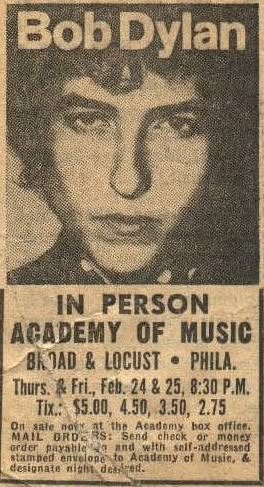
Let me begin with Williams’s seminal meeting with Dylan 60 years ago. On February 24 & 25, 1966, Dylan and The Hawks played in Philadelphia. The artist agreed to meet with the nascent critic who had just started Crawdaddy! a month prior. Williams recalls,
Dylan and his band were coming to Philadelphia, so I sent copies of the first two issues to the theater and asked for free tickets to the concert, and, P.S., any chance of getting an interview? So they passed them along to Dylan, who was just entering his rock and roll phase and I guess was charmed by the idea of a 17-year-old kid putting out a rock magazine. He invited me to his hotel room, and we talked for two or three hours, and I was also given backstage passes for the concert. (SDR)
Wow! Can you imagine? But Williams isn’t bragging about his VIP access. He didn’t even take photos or record the conversation. In fact, he insists upon the same point I’ve made a thousand times to my students: it’s about the art, not the artist. As he puts it in “Understanding Bob Dylan,” published five months after their first fateful encounter, “It is my personal belief that it is not the artist but his work that is important; therefore, I hesitate to go too deeply into the question of who Bob Dylan is” (61).
In his preface to the first Performing Artist book, he draws a crucial distinction between the private person off stage and the public self who performs on stage. According to Williams,
the illusion we all suffer under, as we go to do interviews or read stories about our heroes, is that the person backstage, the private person, has the answers, holds the key, to the mysteries of the public person. This is not so. The two are related to each other, but in ways that the artist as much as the observer finds difficult to understand. The man on stage speaks to us constantly of his inner life; the private man, on the other hand, seldom knows much more than we do about the mystery and power of his public self. When he does have something to say on the subject, he says it in performance. (PA xv)
Right, got it, so the private man is beside the point. Forget the guy who brushes his teeth, cheats on his girlfriend, and reels off vaudevillian one-liners or Zen koans every time a reporter sticks a microphone in his face off stage. That guy’s not going to help you understand Bob Dylan.
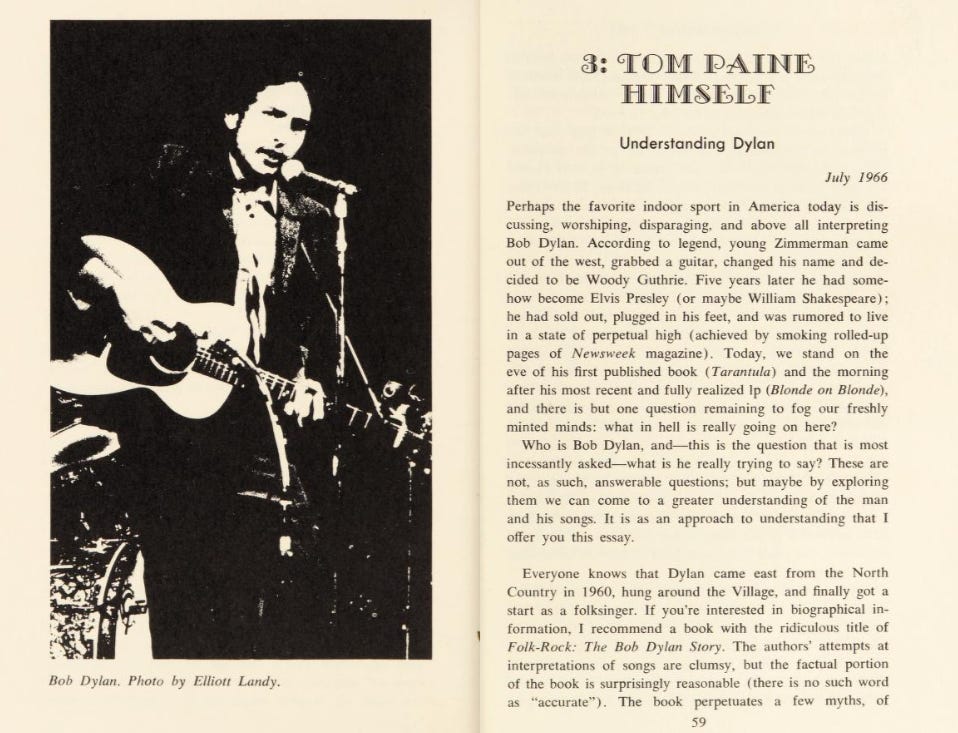
Okay, but how about that other guy, the public artist, the one singing “Like a Rolling Stone” into the microphone on stage, this dude:
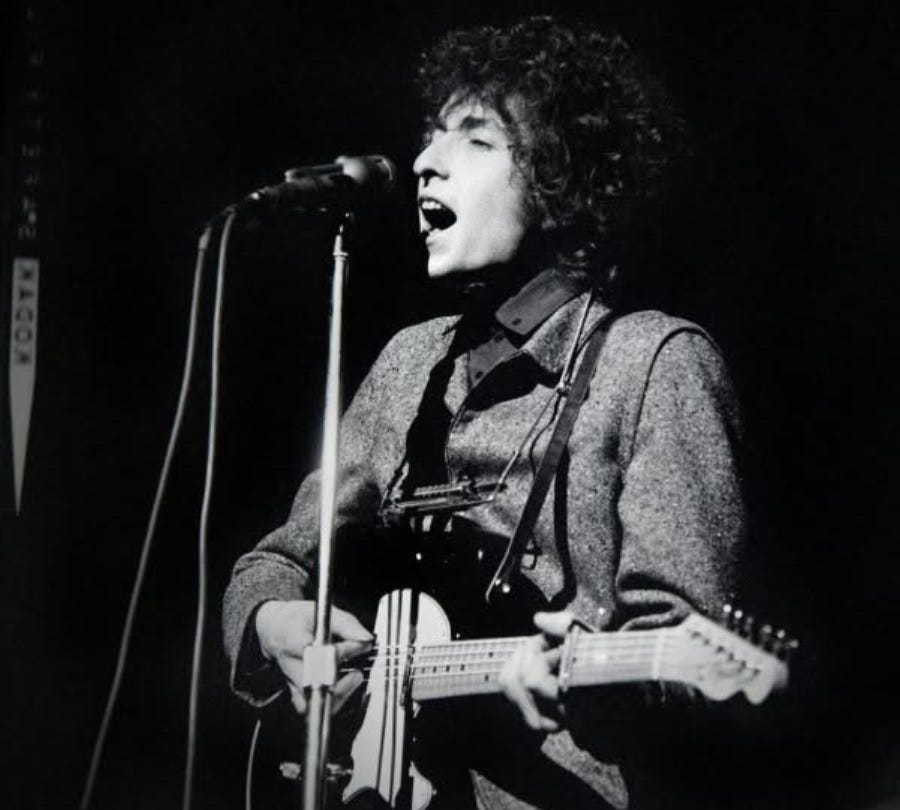
Does this Bob Dylan matter if we’re trying to understand his songs? Is the artist integral to an appreciation of the art? Williams’s answer is unequivocal, consistent, and resounding throughout his career: YES!
Now this is where things get a bit dicey for me. All of my academic training emphasized the importance of critical detachment. Hold the object under examination at arm’s length, cast a cold eye, and whatever you do, don’t smoke dope with Brian Wilson in his pool at 3 a.m.!
The New Critic professors who taught me as an undergrad insisted that the proof is in the pudding, meaning resides entirely inside the sealed container of the artwork, and the artist’s biography is irrelevant. The Poststructuralist profs who taught me in grad school disagreed with the New Critics about almost everything. But they likewise relegated the author to the ashbin, preferring to examine texts as linguistic matrices and cultural byproducts issued by a “scriptor” (Barthes) or an “author function” (Foucault), not some godlike genius-artist.
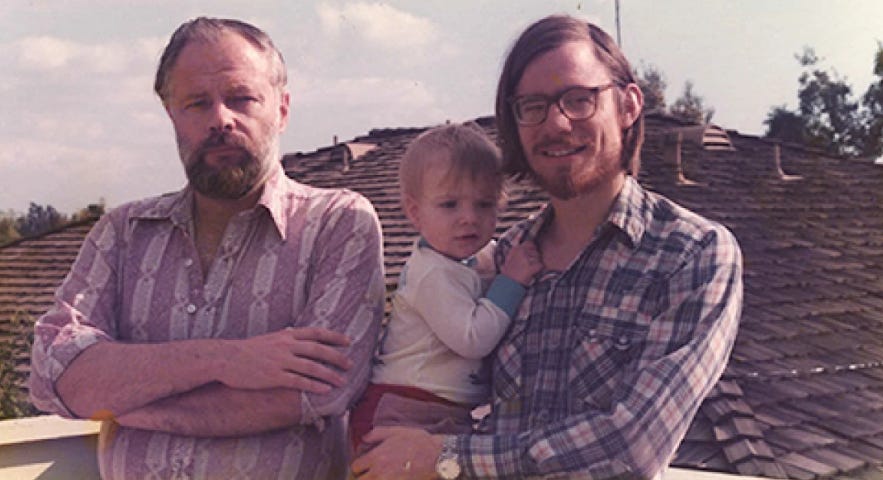
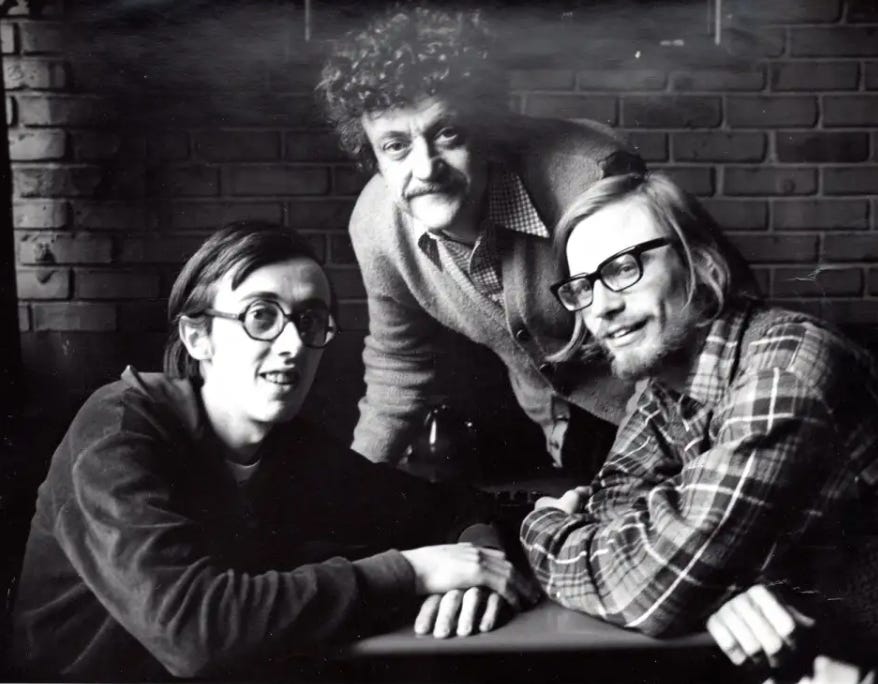
For my part, I’ve always taught students in my Dylan classes not to play hide-and-seek with his music. Let’s not fixate on what lover a song might be based on, and never presume that Dylan the man shares all of the experiences and opinions expressed in his work. It’s art, not a diary entry or sworn deposition.
Williams would certainly agree with some of the above recommendations and cautions. But at the end of the day, he believed art and art criticism were fundamentally forms of self-expression, and there’s no removing the self from the transaction on either end. As he puts it in the preface to Outlaw Blues,
I see rock as a means of expression, an opportunity for beauty, an art. So what I have written is expression, not explanation; an attempt to convey what I feel from the music, an exploration of what rock does to me. Reading the book will not “explain” the music to you; but it might bring you closer to the music, and closer to me. And perhaps the experience of reading it will better enable you to “explain” rock to yourself. (OB 11)
Later in the Performing Artist series, he contends that the artist is a real person communicating with other real people. Reflecting back on that first encounter with Dylan, Williams remembers, “He was open, friendly, kind—quite different from the Dylan many other journalists reported meeting during those years. […] More than anything else I came away with the impression that he was a real person and could be related to as such” (PA 198; emphasis added).
In that initial meeting, Dylan referenced a line from the first issue of Crawdaddy! “where I praised Paul Simon for avoiding the ‘Dylanesque crime’ of songs that go on interminably” (PA198). Without scolding him, Dylan implied that this cheap shot had stung. Williams reflects, “I learned at that moment to be conscious of, and responsible for, what I write and the opinions I express, because what I say might sometimes make a difference to, be felt by, a real person on the other end” (PA 198-99; emphasis added). What a refreshingly simple and sensitive code of ethics, one that legions of snarky Dylanologists would do well to adopt. I’m not talking about self-censorship, but I am talking about basic human decency.
Meeting Dylan didn’t suddenly provide Williams with a magic decoder ring for understanding his songs. But it did instill him with certain bedrock convictions that artists and critics are real people, trying to express themselves openly, honestly, and clearly to their respective audiences. Williams distills down the lasting impact of meeting Dylan:
That afternoon with Dylan gave strong support to my tendency to relate to works of art as things produced not by distant masters but by real people, similar to me, who have feelings and are searching for ways to express them accurately, honestly, straightforwardly. From this point of view, art is something experienced directly, by whoever appreciates it, always accessible to common sense interpretation. (PA 199; emphasis added)
Lesson #1: Don’t worship the artist by writing hagiography.
Lesson #2: Don’t approach songs as soulless texts detachable from the human being who creates and performs them.
Lesson #3: Don’t be an asshole, and don’t write like a pretentious snob.
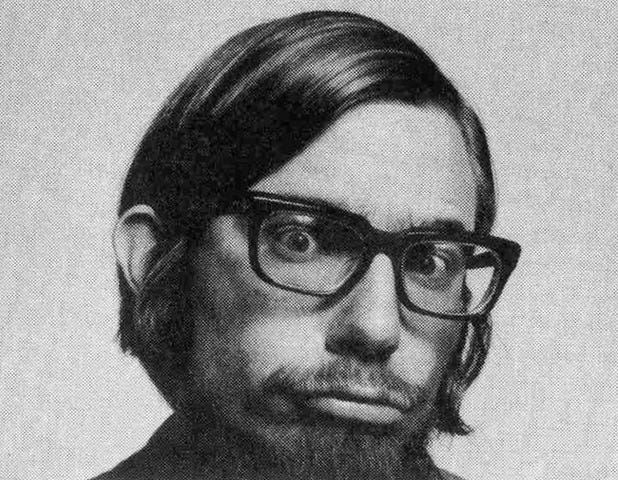
These values may seem so obvious as to hardly need spelling out. But I can tell you in two words why Williams speaks to me with renewed urgency today: Artificial Intelligence. Suddenly, in the span of just a few years, the basic premise that art and criticism are created by and for real people seems a quaint notion from a bygone age. Now that human-centered creativity faces a rapidly escalating existential threat from AI, Williams’s work is more relevant than ever.
“It’s about the art, not the artist”? Yeah, I used to think so. These days, however, I find myself caring very much about who (or what) made the art, as well as who (or what) is generating texts about that art. I’m with Paul—give me real people, and accept no substitutes.
Human Communication
Laura Tenschert has been thinking a lot recently about the relationship of art to AI. For instance, check out her thoughtful discussion with Rebecca Slaman on “Bob Dylan Hotline #2: Bob Dylan’s Patreon & AI.” This has also become a frequent topic of conversation during our monthly Definitely Dylan Zoom sessions. In fact, we were having one of those virtual chats when the news broke that Dylan was starting his own Patreon page. There you can read his latest fictional letters and stories, which bear all the hallmarks of AI-generated texts. Say it ain’t so, Bob! Now I see that his old partner in crime Martin Scorsese has just teamed up with a company aiming to exploit AI film technology. Where have you gone, Paul Williams, our nation turns its lonely eyes to you!
I’m acutely aware that my complaints may sound like little more than humanist nostalgia, the familiar hand-wringing that accompanies every major technological advance in the arts, along with sentimental elegies for the halcyon days of yore. Maybe I’m being a retrograde fuddy-duddy in defending art made by and for humans. Maybe AI is a harmless tool that human artists will harness to create more and better art. Maybe. But I don’t think so. Rereading Paul Williams in 2026, I don’t believe he’d think so either.
In volume one of Performing Artist, Williams rates the performance of “Don’t Think Twice, It’s All Right” captured on The Freewheelin’ Bob Dylan as “a masterpiece,” an honor he reserves for only a handful of Dylan’s most sublime works.
What makes it so special? The critic starts with the artist’s own characterization of the song, quoted in the liner notes: “‘It isn’t a love song. It’s a statement that maybe you can say to make yourself feel better. It’s as if you were talking to yourself’” (56). Williams uses this key to unlock the lyrics: “Shall we take this figuratively—you sing it to yourself to help you feel better about letting go of this person who’s rejected you—or literally—you are singing the song, saying goodbye, to a part of yourself?” (PA 56). Oooh, that’s good, Paul! But there’s more.
He elaborates upon the interpersonal and intrapersonal dynamics in “Don’t Think Twice” to make broader claims about the relationship of the artist to the audience. Pay close attention here because this gets to the heart of Williams’s championship of art as human communication:
My understanding of art is that it occurs when a human has some success in communicating with other humans in a realm that is apart from and deeper than rational, intellectual communication. To say that this realm is emotional is inadequate; to identify it as the realm where beauty is perceived seems helpful. I believe all artistic achievement is ultimately mysterious. And as Dylan’s comments about “Don’t Think Twice” suggest, the purpose of even the most distressing and painful art is in some sense to make the artist, and the person who receives the art, feel better. (PA 57)
You can see Williams putting himself out there, making himself vulnerable to charges of oversimplification or reductive naivete. For his detractors, he represents a juvenile stage of Dylan fandom one must work through before graduating to sophistication. Too much heart, not enough head. To which I reply: Bullshit! Please direct your attention to Lesson #3.
Williams is simultaneously humble and daring. He stakes a claim for the greatness of Dylan’s performance art, while also insisting that great art can be appreciated by anyone who listens attentively. “At its simplest, this involves relieving a fullness, or filling an emptiness, or both. The singer and the listener are incomplete and uncomfortable as they are, and so they grope towards each other in the dark” (PA 57). Art is talking to yourself and others; art is an expression of beauty; art is a means to feeling better; art is releasing abundance or filling a void; art is groping in the dark and searching for human connection.
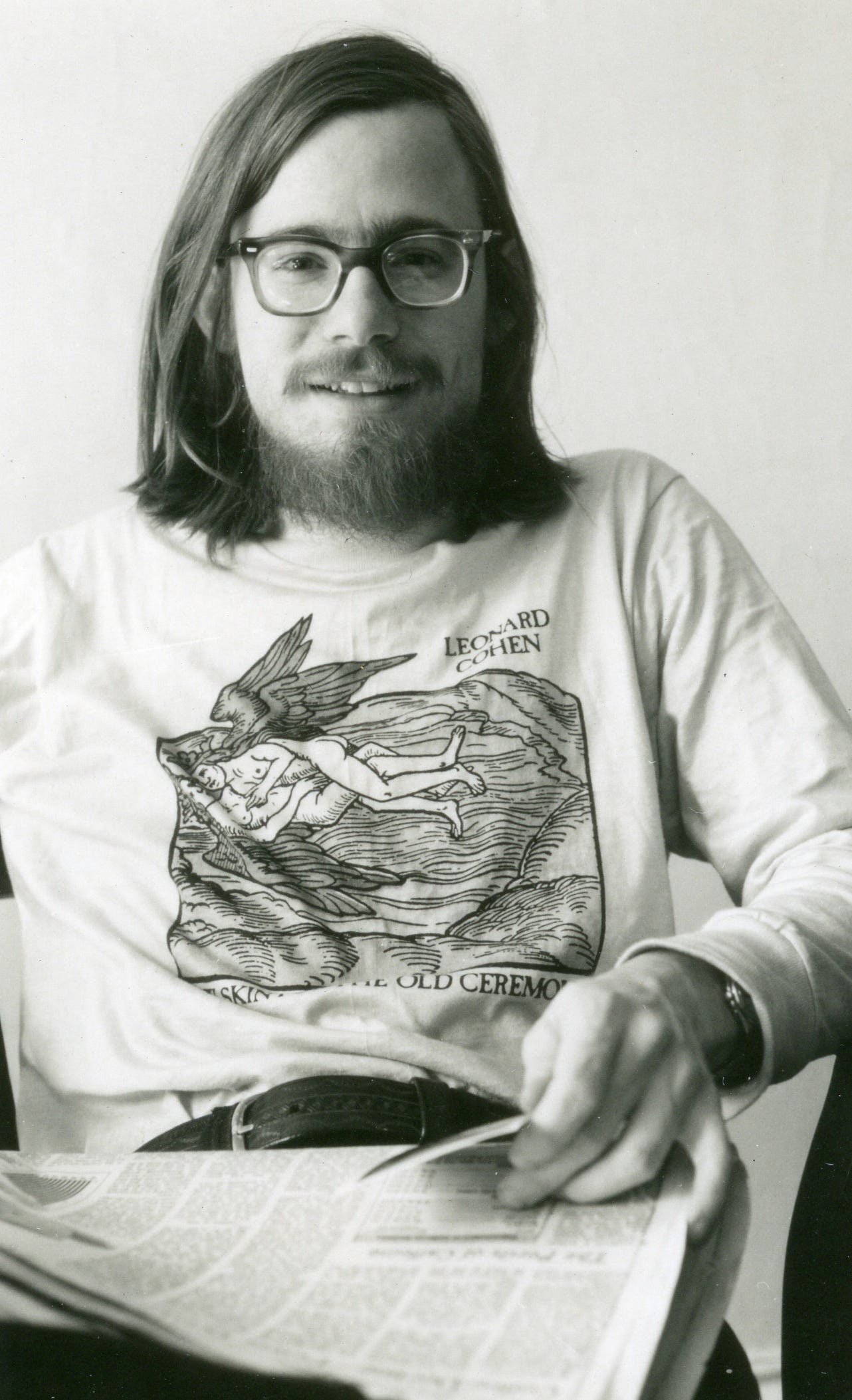
Williams reaffirms his commitment to human communication later in his career. In the self-interview for San Diego Reader he reflects, “Writing for me has been a lifelong struggle to get into that place where I can feel someone on the other side of the words pulling them out of me, and if I haven’t gone deep enough or been honest enough or spoken clearly enough, I know it and am forced to go back and try again and again” (SDR). I invite all of you who write about Dylan to pin this quotation above your desk and use it as your lexicon and prayer book.
These convictions were already firmly in place when he was a teenager writing for Crawdaddy! I’ll give Williams the last word. He penned this passage in February 1968, but it feels just as timely today in the dawn/dusk of artificial intelligence:
It’s alive. It’s reborn in you. Music. The notes are not important. Virtuosity means nothing. No one cares how well you rearrange the objects. You gotta have soul, baby, which just means it’s gotta be you you’re passing on, people receiving parts of people, living matter, animate stuff. The medium and the messages it contains are just so much nothing, trees falling in the forest with no one to hear, unless there is human life on both ends of the line, sending, receiving, transferring bits of human consciousness from one soul to another. Communication is the interaction between our personal worlds. (OB 173, boldface added)
Works Cited
Dylan, Bob. The Philosophy of Modern Song. Simon & Schuster, 2022.
---. Official Lyrics. The Official Bob Dylan Website, https://www.bobdylan.com/.
Gray, Michael. The Bob Dylan Encyclopedia. Continuum, 2006.
Herren, Graley. Dylan in Cincinnati. University Press of Mississippi, 2026.
Reginio, Robert. Bob Dylan Outside the Law: The Poetics of John Wesley Harding. Palgrave Macmillan, 2025.
Tenschert, Laura, with Rebecca Slaman. “Bob Dylan Hotline #2: Bob Dylan’s Patreon & AI.” Definitely Dylan (6 April 2026), https://www.definitelydylan.com/podcasts/2026/4/6/bob-dylan-hotline-2.
Williams, Paul. Bob Dylan, Performing Artist, 1960-1973: The Early Years. Omnibus, 2004.
---. Outlaw Blues: A Book of Rock Music. E. P. Dutton & Co., 1969.
---. “Paul Williams, Crawdaddy’s Daddy, now in Encinitas, Interviews himself on John and Yoko, Jann Wenner, Bob Dylan, Timothy Leary.” San Diego Reader (7 September 1995), https://www.sandiegoreader.com/news/1995/sep/07/cover-crawdaddys-daddy/.
A few years ago, I was talking with Wayne Robins (who also has a Substack account) when we each were presenting on panels at a “World of Bob Dylan” symposium in Tulsa.
He pointed out that I must have been influenced by Paul Williams in my writing. It was so obvious but I hadn’t realized it until he said that. I read Crawdaddy throughout the 70s and had some of his books on Dylan, but that was so long ago that his writing style had creeped into my DNA. The days of Rock Criticism like his are (sadly) mostly gone. Thanks for this!
Wow?! Ive gotten about 1/2 way through- to the photo with 2 writers he was hanging with... one being Kurt Vonnegut. I discovered a few years ago, that Vonnegut had worked with my great- grandfather at a Chicago newspaper. And my cousins showed me our grandfathers/ elder's retirement booklet where Vonnegut had written a lengthy piece on how
wonderful great grandfather Tony was!!
I 'll get back to your piece eventually - TY.