
Dylan in Cincinnati: October 2007
Bonus Episode

Good news! My book on Dylan in Cincinnati, due out this fall from the University Press of Mississippi, is now available for pre-order.
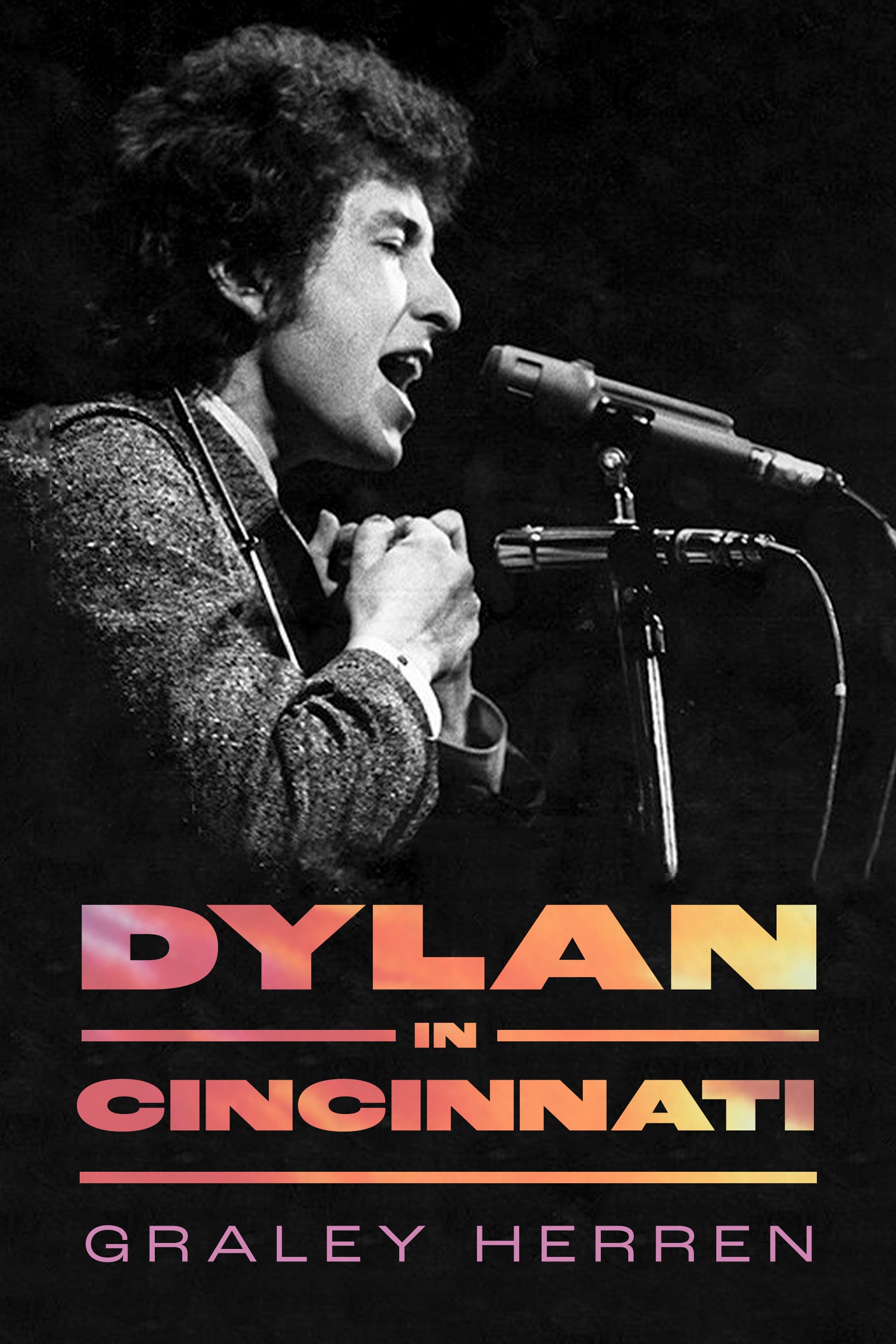
I really appreciate all the positive feedback I’ve received from so many of you as I’ve posted installments of my work in progress on this site. Now I hope you’ll consider buying the book version. To help entice you, the press has agreed to offer a special discount for Shadow Chasing readers. The button below will take you to the publisher’s website. Put in the coupon code CINCY30 for a 30% discount on your pre-order. This takes the list price for the paperback down from $30 to $21 (before taxes and shipping). Not a bad deal, right?
As a special treat, I’ve put together a bonus episode on a concert I initially skipped over in the series. The present piece does not appear in the book. It is a Shadow Chasing exclusive.
I had some pretty disparaging things to say about Dylan’s 2007 concert when I mentioned it in a previous post. I wrote that “it holds the distinction as the least compelling concert he ever played in the city.” To be fair, this says more about how good most of the concerts have been than how bad the 2007 show was. Going back to the recording, I may have been too hasty in hating on Taft ’07.
Mind you, there are still some stinkers. That’s all down to Dylan’s erratic and wolfish vocals, not to the dependably superb musicianship of this really tight NET unit. But I’ll concede that some performances which initially turned me off when I attended the show live or first heard the bootleg, have gradually grown on me. I’ve also belatedly come to appreciate certain dynamics at play in Dylan’s setlist selections that I previously overlooked. Now I come to resurrect Taft ’07, not to bury it.
This was Dylan’s first return to Cincinnati since the fantastic 2001 concert at my home base of Xavier University. In the interim, he completely overhauled the NET lineup. Only bassist Tony Garnier remained from the Cintas Center gig. Larry Campbell and Charlie Sexton had departed, replaced by Stu Kimball (NET member from 2004 to 2018) and Denny Freeman (2005-09) on guitars. They were joined by multi-instrumentalist Donnie Herron (2005-24), who would become one of the most cherished members of the NET and RARW bands. David Kemper had long since handed the sticks over to George Recile, by far the longest serving (and I think best) drummer who ever played behind Dylan (2002-19).
This same band formed the nucleus for Modern Times (2006), Dylan’s third straight stellar album following Time Out of Mind (1997) and “Love and Theft” (2001), and further burnishing his golden renaissance. He was rightly proud of the new songs and had the ideal band for showcasing them in concert. Six of the seventeen songs in the Taft ’07 setlist come from Modern Times. As we’ll see and hear, these included some really standout performances.
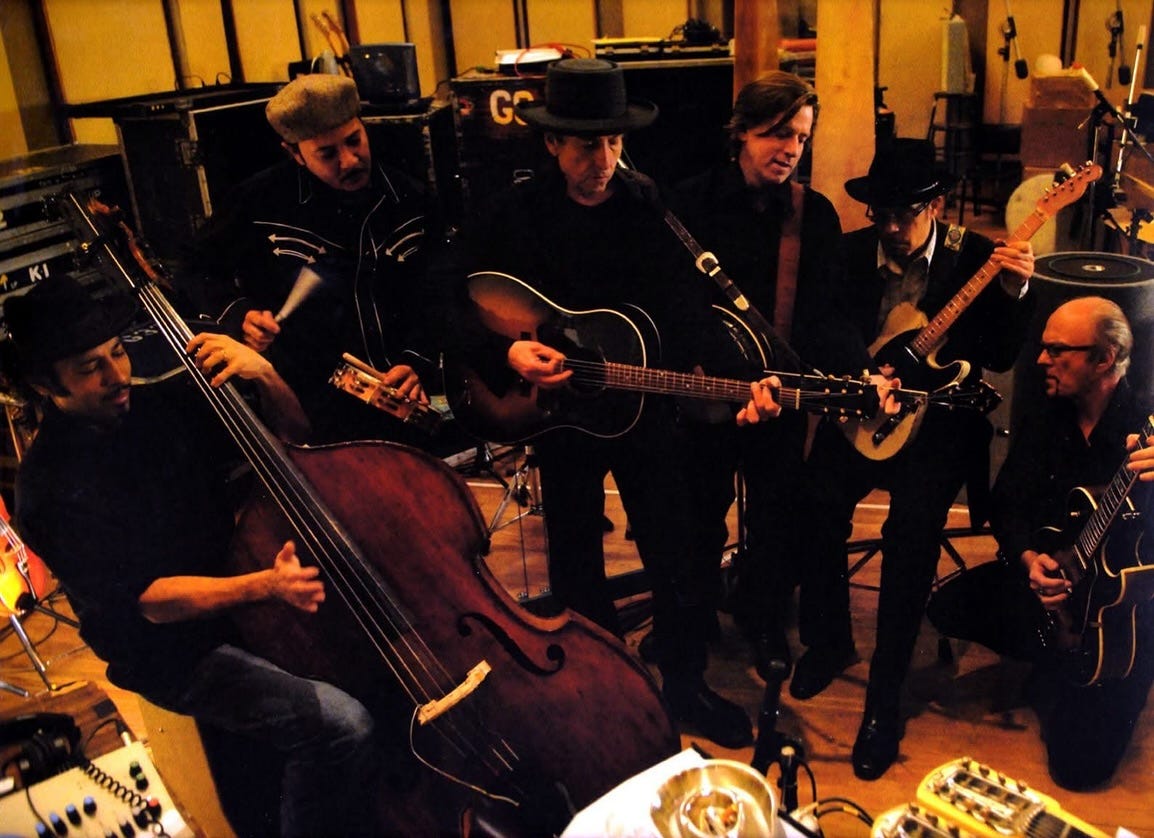
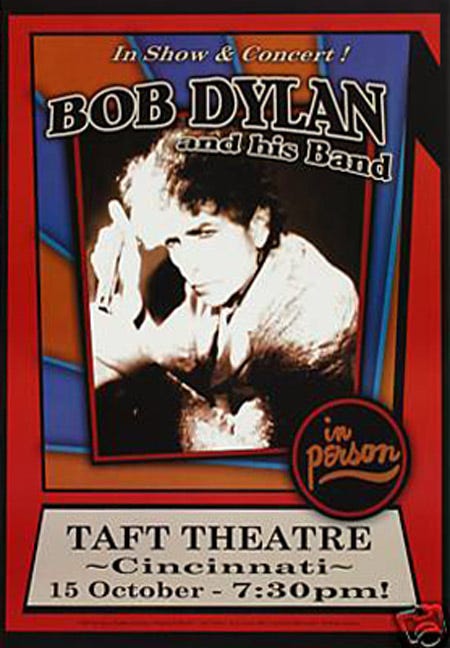
As for the boss, Dylan had transitioned away from guitars to keyboards, though he did play electric guitar on the first few numbers at Taft ’07. This band was new to Cincinnati, but not new to one another; according to Olof Björner, this was the 270th concert this unit had played together. And while we’re keeping score, the show at Taft Theatre—the site of Dylan’s first Cincinnati concert 42 years earlier—was the 1,999th of the Never Ending Tour. He remained in the area to play show #2,000 the following night, just 50 miles up the road in Dayton, Ohio.
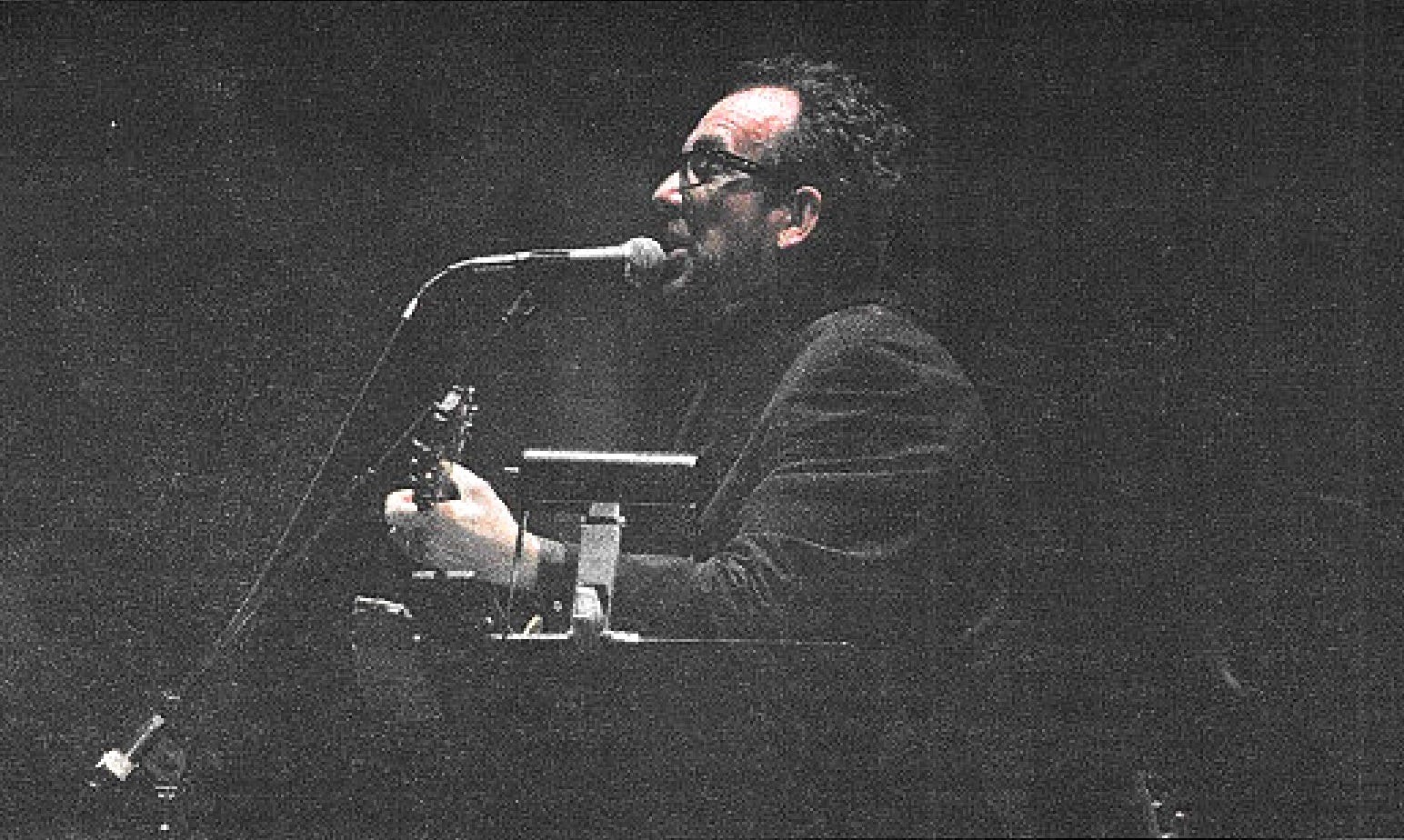
Dylan was accompanied on this tour by two opening acts: the relative newcomer Amos Lee and the legendary Elvis Costello. I attended this show, but I must admit I don’t remember anything about Amos Lee’s set. I think I arrived late and missed it entirely. But there’s no way I would have missed Elvis freakin’ Costello. So why do I have zero memories of his set?
The answer is that Elvis never entered the building. Yes, he was part of Dylan’s tour in the fall of 2007, but he bailed on Cincinnati to play a solo show at Western Illinois University that night. The Elvis Costello Wiki provides all the details, including a setlist, multiple photos, and a review from the WIU Courier. Sorry we were denied an Elvis sighting at Taft ’07, but it’s reassuring that my memory isn’t yet as unreliable as I feared.
The Concert
When: October 15, 2007
Where: Taft Theatre, downtown Cincinnati
Opener: Amos Lee
Band: Bob Dylan (vocals, guitar, harmonica, and keyboard); Denny Freeman (guitar); Tony Garnier (bass); Donnie Herron (fiddle, mandolin, banjo, and steel guitar); Stu Kimball (guitar); George Recile (drums and percussion)
Setlist:
1. “Leopard-Skin Pill-Box Hat”
2. “Don’t Think Twice, It’s All Right”
3. “Watching the River Flow”
4. “Love Sick”
5. “Rollin’ and Tumblin’”
6. “When the Deal Goes Down”
7. “Blind Willie McTell”
8. “Stuck Inside of Mobile with the Memphis Blues Again”
9. “Workingman’s Blues #2”
10. “High Water (for Charley Patton)”
11. “Spirit on the Water”
12. “Highway 61 Revisited”
13. “Ain’t Talkin’”
14. “Summer Days”
15. “Ballad of a Thin Man”
*
16. “Thunder on the Mountain”
17. “Blowin’ in the Wind”
Since 2002, Dylan had been using an odd introduction, projected through the speakers by an announcer, offering a tongue-in-cheek distillation of his career. Ray Padgett tracked down Jeff Miers, the Buffalo News music critic who penned this profile, and shares the backstory on Flagging Down the Double E’s. The intro made its first appearance in Cincinnati at Taft ’07:
Ladies and gentlemen, please welcome the poet laureate of rock-n-roll. The voice of the promise of the sixties counterculture. The guy who forced folk into bed with rock. Who donned makeup in the seventies and disappeared into a haze of substance abuse. Who emerged to find Jesus. Who was written off as a has-been by the end of the eighties. And who suddenly shifted gears, releasing some of the strongest music of his career beginning in the late nineties. Ladies and gentlemen, Columbia recording artist Bob Dylan.
There’s as much lampoon as there is truth in this description. So it strikes me as appropriate that Dylan opens with “Leopard-Skin Pill-Box Hat,” a song that expresses his absurd, bawdy sense of humor as well as any.
Come to think of it, if you want a metaphor for “forcing folk into bed with rock,” you could do worse than the earnest singer trying to seduce the brazenly promiscuous woman in this song, hoping to burrow his way into her furry cap. Folk-rock fusion indeed!
I’ve reconsidered Taft ’07 in a more sympathetic light, and a good example is the evening’s second song, “Don’t Think Twice, It’s All Right.” From the moment I first heard it at the venue, I loved the sound of this one musically. Donnie Herron tugs my heartstrings with his beautiful steel guitar. The other guitarists also find a solid groove during the jams before and after the final verse. Listen through to the end and you’ll hear why George Receli is my favorite NET drummer. The band has a back-porch hootenanny going, then Receli kicks through the screen door and reminds them that this is rock-n-roll.
The music is unimpeachable. But then there’s the vocal. Here are my initial notes: “Dylan keeps speeding up, slowing down, shifting his stress on the words, searching in vain for an effective rhythm, and generally fucking around. If you love this song—and what Dylan fan doesn’t?—then it’s hard not to cringe at this slipshod rendition.”
After listening several more times, however, Dylan’s performance slowly wins me over. Yes, he races through the words at times. But once I (ahem) think twice about it, the effect isn’t necessarily a sign of carelessness but could be a creative choice. Maybe he’s expressing the singer’s impatience to hustle down the road, beating a rushed retreat from the woman who set his boot heels a-wanderin’, one step ahead of the shotgun or the skillet. It’s actually not slipshod. Especially in the final verse, Dylan’s distinct enunciation and stress on certain words shows that he is paying attention to what he’s saying. And the musicianship is more than “all right”: it’s kick-ass. You know what, on third thought, I’ll be damned: I like this performance.
I’m a sucker for anything from Time Out of Mind, and the fourth song is a riveting “Love Sick.” As I wrote in my book on TOOM, this song is built around a repeated guitar lick that reminds me of Bernard Herrmann’s stabbing score for the shower scene in Psycho. But the Taft ’07 “Love Sick” includes a separate competing guitar part that is curious and cool. Since I’m not a musician, I don’t have the proper vocabulary to explain it musically, but I can describe how it feels. The singer throbs with anger, bitterness, and bloodlust—love sickness—which is aggravated by the stabbing first guitar. But then a fluttering sound descends from the second guitar, distracting his thoughts in a different direction.
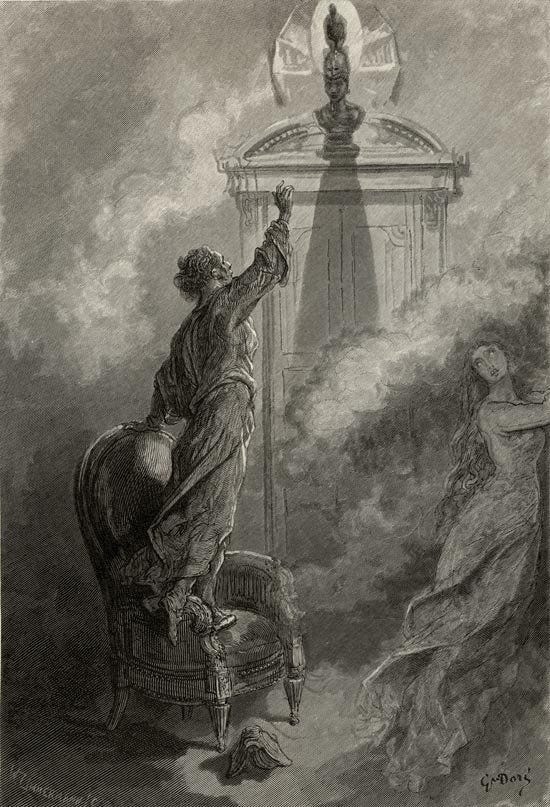
To translate the mood from Dylan’s musical world to my literary one, this rendition of “Love Sick” reminds me of Poe’s “The Raven.” The brooding speaker’s thoughts are fixated on his dead lover, but the unexpected noise of a bird intrudes upon his reveries and redirects his obsession. Freeman and Kimball’s guitars sound like they’re vying for Dylan’s attention, dragging him first one way then another through this dark trance of a fever dream.
Dylan follows “Love Sick” with his first song of the night from Modern Times. “Rollin’ and Tumblin’” lives up to its name as a bluesy rocker. But lyrically we’re still wading through the swamp of a depraved mind. This singer is menacing and misogynistic. He views women as a barrel full of bad apples since the time of Eve. He complains, “Some young lazy slut has charmed away my brains” and “This woman so crazy, I swear I ain’t gonna touch another one for years.” Sometimes he’s morose: “Ain’t nothin’ so depressin; as tryin’ to satisfy this woman of mine.” Sometimes he’s threatening: “Sooner or later you too shall burn.” He may follow through on these threats, and not for the first time: “The night’s filled with shadows, the years are filled with early doom / I’ve been conjurin’ up all these long dead souls from their crumblin’ tombs.” Are these the corpses of previous victims of his wrath?
Like the singer in the previous song, he’d rather be with her than without her. In “Love Sick” he admits: “Just don’t know what to do / I’d give anything to be with you.” In “Rollin’ and Tumblin’” he tries to patch things up: “Let’s forgive each other darlin’, let’s go down to the greenwood glen / Let’s put our heads together, let’s put old matters to an end.” But there will be no happy endings to either tale. He is bound to roam and ramble, and she is bound for a worse fate, sunk in a river or buried in a field. Dylan’s fascination with murder ballads from the nineties onward continues in Modern Times with “Rollin’ and Tumblin’.” This is another character study of a brooding love-sick man with blood in his eyes and daggers in his thoughts for the woman he believes did him wrong.
After two songs in a row featuring depraved protagonists, Dylan completely shifts gears with one of the most tender love ballads of his career, “When the Deal Goes Down” from Modern Times. It’s a beautiful vow of enduring faith and unconditional love, and Taft ’07 marks its only live performance in Cincinnati.
Dylan’s voice crunches like car wheels on a gravel road, but in this case it’s an effective vehicle for the lyrics. The song catalogues life’s relentless sorrows, suffering, and loss. And yet, in the midst of this steady erosion and pain, the singer can always lean on one pillar of strength and comfort: you.
Who is you? There’s never a single simple answer to that question in Dylan. It could be a faithful lover. When I’ve taught this song in class, some students envisioned their grandparents, imagining “When the Deal Goes Down” as a deathbed vow at the end of a long marriage. The sentimental video featuring Scarlett Johansson encourages these associations. The spectator is positioned as an old widower, re-watching home movies of his dead wife after her passing. Poe’s lost Lenore reanimated for the video age.
Alternatively, “When the Deal Goes Down,” could be an affirmation of spiritual faith. Certain references invite religious interpretations, as when the singer refers to “Each invisible prayer is like a cloud in the air” or “We all wear the same thorny crown.”
Regardless of what sources Dylan may have had in mind when writing the song, when he sings it live he is unmistakably addressing it to the audience in front of him. This comes through poignantly in his touching delivery of the last verse. His gravelly voice only enhances the emotion at Taft ’07:
I picked up a rose and it poked through my clothes
I followed the winding stream
I heard a deafening noise, I felt transient joys
I know they’re not what they seem
In this earthly domain full of disappointment and pain
You’ll never see me frown
I owe my heart to you, and that’s sayin’—sayin’ it true
And I’ll be with ya when the deal goes down
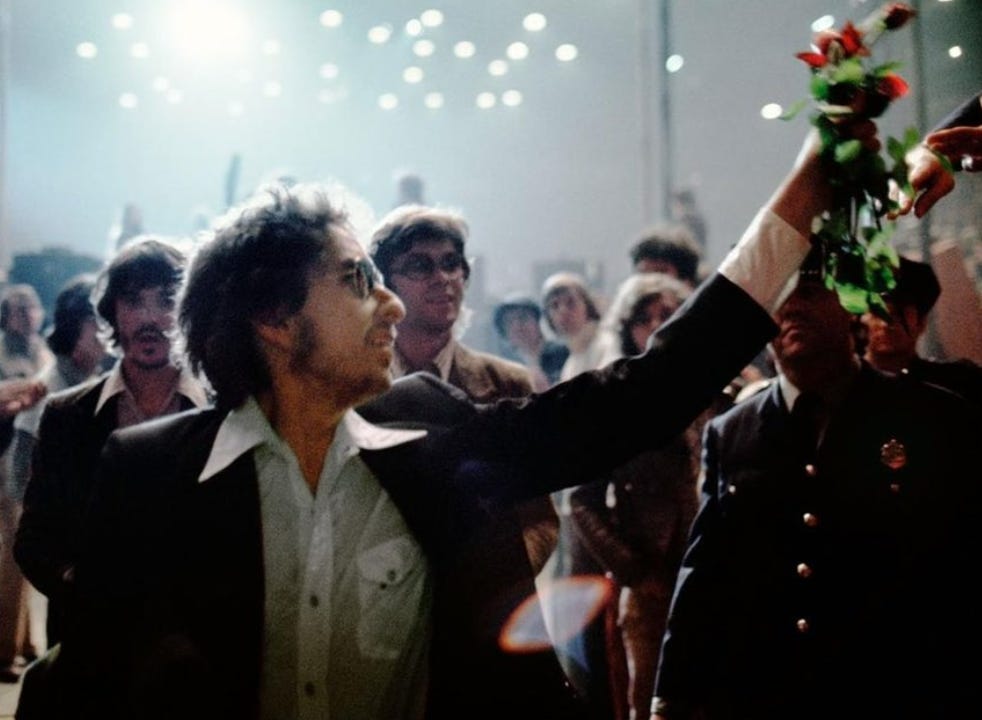
I remember the thrill when I recognized the opening strains of “Blind Willie McTell.” This is one of my all-time favorite Dylan songs, but I had never seen him play it live. Indeed, this was its first appearance in Cincinnati. I wish I could report that Dylan’s performance was as sublime as this masterpiece deserves. But that’s not how it came across to me.
Dylan’s voice sounds like he’s been gargling pine cones. The wolfman is growling on this one. If I wasn’t already familiar with the song, I’d struggle to understand some of the lines, and that’s a big loss in a lyrical gem like this one. Dylan wins deserved cheers when he breaks out his harmonica for the first time tonight. Thankfully, that instrument is exempt from the ravages of time. The guys standing near the taper absolutely love it and hoot out their approval.
Don’t get me wrong. I like it. I just don’t love it as much as I want to, as much as I love the version on the first Bootleg Series. Maybe we’re meant to check all expectations and ignore all previous standards of excellence in order to be fully present and in the moment at a 21st century Dylan concert. But there’s no Yondr pouch for one’s memory.
Others managed to grasp the greatness that eluded me in Dylan’s Taft ’07 “Blind Willie McTell.” Tim Lucas heaped praise on it for his review on Bob Links:
Then came the evening’s first “oh my God” moment with a sublime and heartfelt performance of “Blind Willie McTell,” with Herron on banjo. After the show, I compared my memory of this performance to an earlier one from Melbourne last August, and—again—the difference I heard was the distinction between playing it (possibly even learning how to play it as a unit) and meaning it. Before the song was even over, I knew that this was the finest live musical performance I’d ever seen, of one of the most moving songs ever written. It was rewarded with one of the most enthusiastic ovations of the evening.
I know FOMO means “fear of missing out.” But what do you call it when you attend the same event as the person sitting next to you but still miss out on sharing the same experience? I guess you call it a Bob Dylan concert.
After a forgettable mush-mouth performance of “Stuck Inside of Mobile with the Memphis Blues Again,” Dylan dials up another number from Modern Times. “Workingman’s Blues #2” displays all the greatest strengths of the album. When I first listened to Modern Times, I liked it a lot but thought the title was ironic. With melodies borrowed from Hambone Willie Newbern’s “Roll and Tumble Blues” (1929) and Bing Crosby’s “Where the Blue of the Night (Meets the Gold of the Day)” (1931), the album’s music feels distinctly old-timey.
Dylan sleuths soon unearthed quotations ranging from the classical Roman poet Ovid to the laureate of the Confederacy Henry Timrod, reinforcing Modern Times’ roots in the distant past. Lyrical clues in “Workingman’s Blues #2” suggest that the singer is a veteran, but as is often the case with Dylan’s war references, it’s anybody’s guess which conflict he’s referring to. He embodies the world-weary soldier effectively in his Taft ’07 performance, sounding haggard but resilient from his battles both abroad and at home. Dylan audibly sags beneath his load tonight. But that’s the life of a grunt, whether you’re hauling for Uncle Sam or for Amazon.
Modern Times was Dylan’s first album released during the post-9/11 wars in Afghanistan and Iraq. With the advantage of hindsight, we also know that the 2008 global financial crisis was just around the corner. At times Dylan once again comes across as a weatherman who knows which way the wind blows.
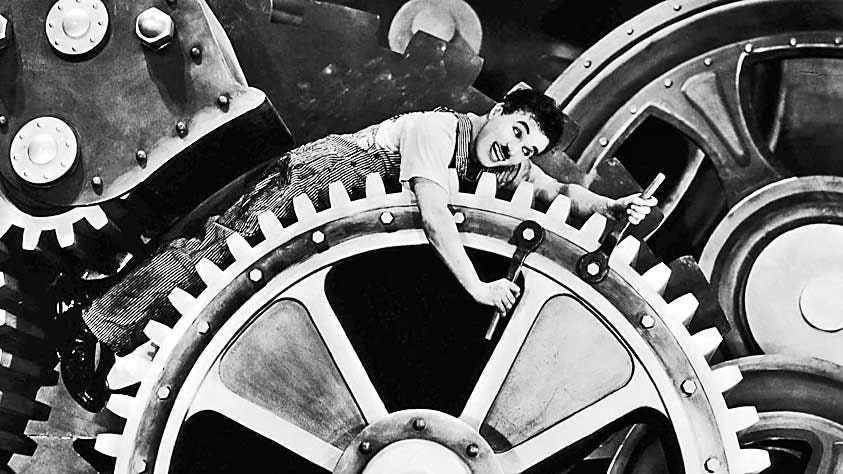
Timothy Hampton effectively tunes in to Dylan’s contemporary social commentary in Modern Times. Hampton observes, “Borrowing its name from Charlie Chaplin’s 1936 film, which examines the indignities of labor in the new world of industrial capitalism, Dylan updates the title by presenting a suite of songs about the experience of the modern worker in a post-industrial, globalized economy.”
Writing from the vantage point of 2019, during President Trump’s first term, Hampton interprets “Workingman’s Blues #2” in light of socioeconomic anxieties that contributed to Trump’s political rise. As Hampton hears it,
He sings of a world in which the traditional virtues of hard work, craftsmanship, and devotion to community have been rendered economically irrelevant. Dylan’s characters belong to a group that Donald Trump has claimed as his own, the non-college-educated working classes. […] Dylan digs into the very fabric of alienation, showing us how it works from the inside out. He represents the interiority and emotional ecology of the citizens who became stereotypical Trump voters. By exposing the psychic toll of dispossession, his songs suggest why art in our own moment—if it is to matter at all—needs to account for the suffering found there.
In “Workingman’s Blues #2,” Dylan quotes from “Tristria,” a poem written by Ovid during his exile from Rome. The ancient author’s mood translates well to modern times: “The entire point of Dylan’s song,” Hampton argues “is that, in the world of globalized capital, everyone is an exile. Even if you are at home, you are not at home. Home is just a memory, even when you are in it.”
As I emphasize throughout Dylan in Cincinnati, where and when a performance takes place matters. Look no further than Ohio for evidence supporting Hampton’s argument. For most of its history, Ohio has been a bastion for the Republican party, producing seven Republican presidents [Grant, Hayes, Garfield, Harrison, McKinley, Taft, and Harding] and a slew of powerful congressmen, senators, and governors. But Ohio is also part of the so-called “Rust Belt”: former manufacturing powerhouses that have been devastated by technological shifts and massive outsourcing of jobs overseas.
After a generation of steady post-industrial decline, Ohio voters broke with the Republican party to support Barack Obama, whose victories in the state in 2004 and 2008 were crucial to his presidential election. However, that short-lived Democratic dalliance now seems a long time ago.

Trump’s populist rhetoric of class-based grievance and his nationalist “America First” agenda resonated with thousands of angry and alienated white working-class voters across the Rust Belt states of Ohio, Wisconsin, Michigan, and Pennsylvania, catapulting him into the White House in 2016 and again in 2024. Like the rest of us, Dylan couldn’t have imagined in 2007 that the bombastic host of The Apprentice would be President of the United States a decade later.
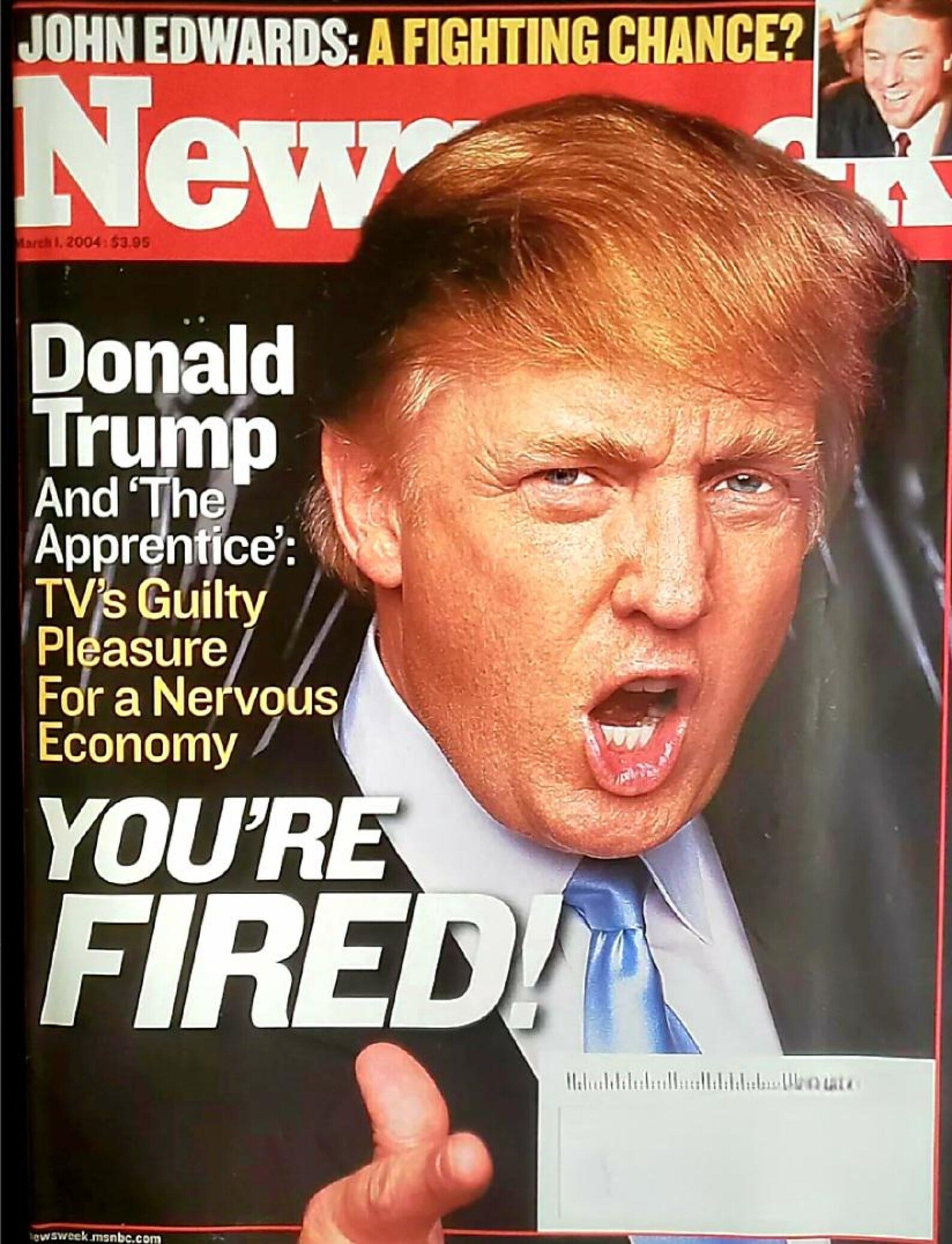
In “Workingman’s Blues #2,” Dylan voices feelings of displacement, disillusionment, disrespect, and economic uncertainty that Trump later exploited to political advantage with his “Make America Great Again” campaign. As Hampton observes in Modern Times, “Dylan’s songs capture the struggle to mobilize the remaining traces of stability and intimacy—the memory of ‘the place I love best,’ the fantasy of a lover’s touch—to shore up the self in an economy that thrives on psychic disorientation.” As we’ve all learned over the intervening years, Trump depends upon on psychic disorientation to peddle his nostalgic fantasies about the return of white American hegemony and a bygone era of industrial might.
This is starting to get depressing! Let’s return to the concert. After a rousing rendition of “High Water,” and before the band launches into the next song, someone in the crowd yells out: “Play something rare!” Ha! Other artist’s fans come out to hear the hits, but Dylan has trained us to lust after rarities instead. He fed this appetite during the early years of the NET, but setlists were relatively stable and predictable by 2007. Still, it’s worth noting that 8 of the 17 songs at Taft ’07 had never been played before by Dylan in Cincinnati.
One of those city debuts is “Spirit on the Water” from Modern Times. The singer opens: “Spirit on the water / Darkness on the face of the deep.” These lines echo the biblical creation myth: “In the beginning God created the heaven and the earth. And the earth was without form, and void; and darkness was upon the face of the deep. And the Spirit of God moved upon the face of the waters” (Genesis 1:1-2). The song begins with the birth of the cosmos, but it moves toward death.
The music sounds like a shuffle from some thirties love ballad, and many of the early lines are saccharine-sweet clichés. But a darker element gradually emerges, suggesting we’re hearing another late Dylan murder ballad masquerading as a torch song.
I’m as pale as a ghost
Holding a blossom on a stem
You ever seen a ghost?
No, but you have heard of them
What’s all this talk about ghosts? Is he suggesting she might soon become one? He offers another implied threat with the lines: “I’m saying it plain / These ties are strong enough to bind.” Bind like a rope around the neck? Later he says it even plainer:
I wanna be with you in paradise
And it seems so unfair
I can’t go back to paradise no more
I killed a man back there
This song has less to do with the God of creation and more with the snake lurking in the garden, scheming to introduce death into the world.
Although I certainly didn’t notice it that night in the audience, after listening to the bootleg several times I’m struck by how frequently Dylan invokes scriptural characters and scenes in the Taft ’07 setlist:
“Rollin’ and Tumblin’” [song #5] refers to doomsday and to the dead rising from their tombs (aka the rapture)
“When the Deal Goes Down” [song #6] refers to prayers, souls, and Jesus’ crown of thorns from the crucifixion
“Blind Willie McTell” [song #7] opens with a Passover reference (“Seen the arrow on the doorpost”; cf. Exodus 12), alludes to the city of God called New Jerusalem (cf. Revelation 3:12 and 21:2), and glosses “corruptible seed” (1 Peter 1:23)
“High Water” [song #10] declares “I’m preachin’ the Word of God,” and the title image invokes (among other historical references) Noah’s Flood (Genesis 6-9)
“Spirit on the Water” [song #11] (see above)
“Highway 61 Revisited” [song #12] refers to God commanding Abraham to sacrifice his son Isaac (Genesis 22)
“Ain’t Talkin’” [song #13] refers variously to the mystic garden (cf. Garden of Eden), prayer, evil, mercy, cities of the plague, and heavenly aid
“Summer Days” [song #14] declares “Standing by God’s river, my soul is beginnin’ to shake”
“Thunder on the Mountain” [song #16] invokes God speaking to Moses on Mt. Sinai
“Blowin’ in the Wind” [song #17] gestures toward the Noah’s dove searching for dry land, as well as scriptural associations between the wind and the Holy Spirit
Holy Moses! Dylan wasn’t overtly preaching from the stage as he did during his evangelical tours. Nevertheless, on a subtle but persistent level, Taft ’07 is the most religious concert Dylan played in Cincinnati since Music Hall ’81.
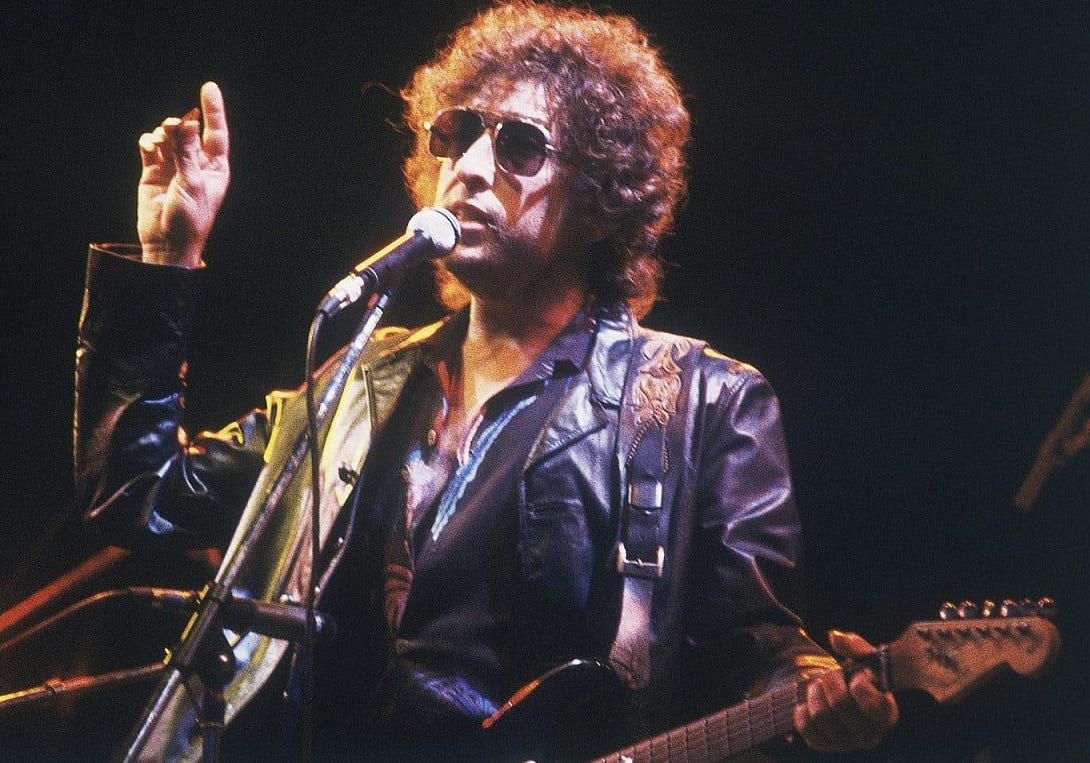
Among these Taft ’07 songs, the standout for me is “Ain’t Talkin’.” This remains Dylan’s only performance in Cincinnati, and it’s a killer (in more ways than one). Dylan’s beleaguered voice sometimes struggles to get the job done tonight, but on a harrowing song like “Ain’t Talkin’” it’s the perfect poison.
All my loyal and much trusted companions
They approve of me and share my code
I practice a faith that’s been long abandoned
Ain’t no altars on this long and lonesome road
In his Bob Links review, Tim Lucas heard those lines and made an interesting literary analogy:
At that moment, I felt that I was looking at the Don Quixote of Rock & Roll, and then I got the even stronger feeling that he just might be the real Don Quixote, too—or at least the living man Cervantes knew, the inspiration for his immortal creation—determined to walk that road to the end of his days, telling the capital T truth to every cockeyed windmill town on the map. And when he sang the chorus ‘Ain’t talkin’, just walkin’ / Eatin’ hog eyed grease in a hog eyed town / Heart burnin’, still yearnin’ / Someday you’ll be glad to have me around,’ I felt every heart in the theater pour open. I know mine did.
Mine, too. When it comes to “Ain’t Talkin’,” Lucas and I were experiencing the same concert.
However, now that I’ve belatedly picked up on the scriptural theme in this setlist, my chief reference point isn’t Cervantes but Genesis. This haunting song depicts a damned soul doomed to walk the earth as a scorned outcast. I don’t hear Quixote—I hear Cain. After committing the first murder by slaying his brother Abel, Cain was cursed by God:
What hast thou done? The voice of thy brother’s blood crieth unto me from the ground. And now art thou cursed from the earth, which hath opened her mouth to receive thy brother’s blood from thy hand. When thou tillest the ground, it shall not henceforth yield unto thee her strength. A fugitive and vagabond shalt thou be in the earth. (Genesis 4:10-12)
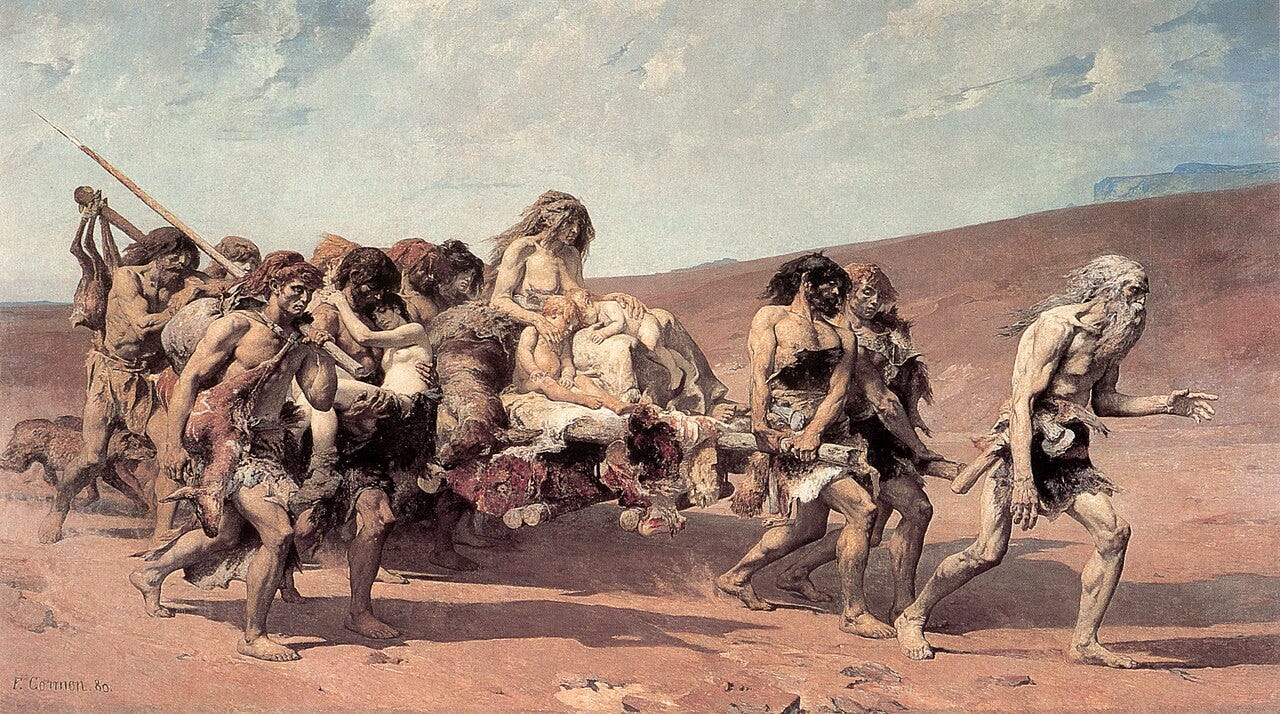
Dylan has channeled Cain before, a subject I studied in a previous piece on Holy Outlaws. As a road warrior himself, driven by some mysterious but irresistible compulsion to wander the globe forever, he probably relates to the figure personally as well as artistically. Whatever gets him there, he raises Cain with spellbinding gravitas at Taft ’07.
How can Dylan possibly follow his cold-eyed vision of a postapocalyptic wasteland in “Ain’t Talkin’”? With the antidote to the poison: a jubilant, heart-warming, rump-shaking rendition of “Summer Days.” If you want a snapshot of this NET band’s tremendous range, just take a listen to their back-to-back performances of “Ain’t Talkin’” and “Summer Days.”
“Summer Days” is always a fun song live, but it’s an especially welcome ray of sunshine after our dark descent into the hellscape of “Ain’t Talkin’.” The whole band rises to the occasion. This live arrangement makes space to showcase each of the players individually, but then they always come back together as a musical engine firing on all cylinders.
“Summer Days” is the perfect outlet for expressing Dylan’s love of fifties rockabilly. This must be the sound that Bobby Zimmerman dreamed of creating on stage back when he was putting together his first bands. What a privilege for us at Taft ’07 to witness his teen dream come true.
Dylan and mates treat the Taft faithful to two songs in the encore. The first, “Thunder on the Mountain,” is another rockabilly barn-burner. It’s the opening track on Modern Times, and here it’s the last of six songs from the album. Dylan slurs his way through the early verses, but then the music blasting on stage perks him up. George Receli could raise the dead with his drums, and the guitars are cooking with gas. The singer in “Summer Days” boasts, “Gonna break in the roof, set fire to the place as a parting gift.” That’s what the band does to Taft Theatre on “Thunder on the Mountain”—they’re en fuego!
“Thunder on the Mountain” could have served as Dylan’s mic-drop moment. He certainly had the crowd on its feet, fired up and feeling they got their money’s worth. But instead he decides to send us home with an even more special gift: “Blowin’ in the Wind.” I’ll let my virtual seatmate Tim Lucas set the scene for you:
A huge, stomping, howling ovation brought Dylan and his band back for “Thunder on the Mountain” and the evening’s second “oh my God” performance, an unexpected band arrangement of “Blowin’ in the Wind.” No one in the audience seemed to know what was coming, as the band wended its way through the introductory passages, until Dylan leaned forward to sing the song’s opening question—and, at that moment, you could hear and feel the awe coming from the crowd, travelling from one person to the next in gooseflesh. Though Dylan has written countless songs, even countless masterpieces since this early anthem, it somehow remains the quintessence of his being in ways one can’t fully appreciate until one sees it performed live by the author. […] It can’t be topped. Show over. Onward, my Sancho Panzas, to the next town.
In his previous Cincinnati concert six years earlier, Dylan’s final two encore songs were the hopeful “Blowin’ in the Wind” followed by the foreboding “All Along the Watchtower.” In my piece on Xavier ’01, I mused about how the effect would have been different had he reversed that order. Interestingly, Dylan had closed his three previous shows (Pittsburgh, Ypsilanti, and Columbus) with “All Along the Watchtower,” and he would close his next show (NET concert #2,000 in Dayton) with “Watchtower,” too. Maybe it was just a spur-of-the-moment decision to close the Cincinnati show with “Blowin’ in the Wind.” Of course, I’d like to think that he was conscious of ending his last show in town with “Watchtower” and didn’t want to repeat himself. But I’m sure that’s wishful thinking.
One thing I couldn’t have noticed then, but which fascinates me now, is how much the opening of the Taft ’07 “Blowin’ in the Wind” sounds like another Dylan song. Listen for yourself:
Now sing it with me: “I’m searching for phrases to sing your praises….” Totally sounds like “Soon After Midnight,” right?
Except that this is 2007, and “Soon After Midnight” wasn’t released until 2012 on Tempest. The similarity could just be a coincidence, but it’s worth noting that Stu Kimball played on both the Taft ’07 “Blowin’ in the Wind” and “Soon After Midnight” on Tempest. It would be awfully interesting if Dylan packed that motif away in the warehouse of his mind and brought it out of storage five years later when he was producing his next album. Maybe I witnessed the band workshopping a song that gestated for five years before it was delivered.
Attending a Dylan concert in recent years can feel like worshipping at the Church of Bob. In the first decade of the 21st century, however, it was much more hit-and-miss: you got the maestro dispensing a virtuoso performance, or you saw the phantom engineer driving the train off the rails and over the cliff—sometimes both on the same evening, as at the Taft Theatre on October 15, 2007. I cringed more than once while listening to Dylan heave his beloved classics into the wood chipper of his 2007 voice. But then he would launch into “Love Sick” or “Ain’t Talkin’” or “Summer Days” or “Blowin’ in the Wind” and it left me starry-eyed and laughing all over again, searching for phrases to sing his praises.
If you enjoyed this bonus episode of Dylan in Cincinnati, then please consider buying the book. There I analyze concerts played in each decade from the 1960s to the 2020s, placing them within the context of Dylan’s career and the civic life of Cincinnati. Remember to use the coupon code CINCY30 for a 30% discount. As the publication date draws closer, I’ll put out one or two more special segments about Dylan in Cincinnati. Many thanks for your support!
Works Cited
Bootleg audio recording (LB-5438). Taper romeo. Taft Theatre, Cincinnati (15 October 2007).
Concert 2007-10-15. The Elvis Costello Wiki, https://elviscostello.info/wiki/index.php?title=Concert_2007-10-15_Macomb.
Dylan, Bob. Song Lyrics. The Official Bob Dylan Website,
https://www.bobdylan.com/.
Hampton, Timothy. “Bob Dylan in Trumpland: The Workingman in ‘Modern Times.’” The MIT Press Reader (17 June 2019), https://thereader.mitpress.mit.edu/dylan-modern-times-trump/.
Lucas, Tim. “In the Presence of Don Quixote.” Bob Links (15 October 2007), https://www.boblinks.com/101507r.html.
Padgett, Ray. “‘The poet laureate of rock-n-roll, the voice of the promise of the ’60s counterculture….’” Flagging Down the Double E’s (15 August 2021),

.
Very excited about the book. As your publicist, we need to start planning the launch and tour.
Thanks for this generous bonus chapter. I will certainly be ordering the book. I was there at the Taft in 2007 and my only clear memory of the concert was the performance of "Ain't Talkin'", which I recall as just as sublime as you say. The other memory I have is of a literature professor friend, a Melville scholar, who observed after the show that Dylan no longer cared about melody. I did not quite agree but the comment has stuck with me.